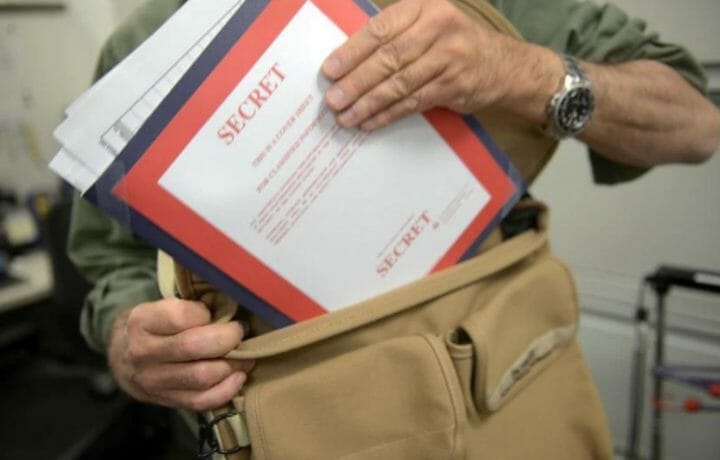
In military operations, the greatest danger doesn’t always come from beyond the perimeter. Sometimes, the real threat lurks within. Insider threats, whether malicious, negligent, or unintentional, remain one of the most difficult challenges for both government and private organizations to detect and defeat.
“Insider threats are underestimated—because smart insiders know how to vanish.”
– Dr. Larry Ponemon, Chairman and Founder of the Ponemon Institute.
The U.S. military has long understood this reality. Protecting classified spaces, sensitive information, and mission-critical systems requires not just technology, but a mindset of vigilance. The same precision applied on the battlefield can, and should, be applied to safeguarding the workplace.
Risk Awareness as the First Line of Defense
Service members are trained to identify potential risks before they become threats. From scanning terrain for hidden dangers to assessing behavioral patterns during patrols, risk awareness is ingrained in the mission. That same skill set translates directly into protecting classified spaces.
In practice, this means encouraging personnel to:
- Recognize anomalies in behavior or access patterns.
- Trust instincts when something feels “off.”
- Report concerns without fear of reprisal.
Like a squad leader who insists on “eyes out” during a convoy, leaders in secure environments must reinforce constant vigilance.
Threats from Unexpected Places
Not all insider threats are deliberate acts of espionage or sabotage. Sometimes, the breach comes from well-meaning but unsuspecting sources. Family and friends, for example, may unintentionally compromise security by sharing details on unsecured networks, through casual conversations, or on social media.
Make sure that you take time to inform your family and friends about possible risks, red flags to look out for, and how to secure personal networks, including social media.
- Loose Networks: An unsecured home Wi-Fi connection or a borrowed device can become an entry point for adversaries.
- Social Media Exposure: Posts that reveal deployment dates, work locations, or project details, even indirectly. They can provide valuable intelligence to hostile actors.
- Casual Conversations: Relatives or friends who share “interesting stories” without realizing the implications may inadvertently spread sensitive information.
The lesson is clear: insider threats don’t always come from bad actors within the organization. Sometimes, they’re the byproduct of everyday habits in the broader circle of trust.
Building Layers of Security
The military rarely relies on a single defense. Instead, it uses overlapping measures: perimeter security, checkpoints, patrols, and rapid response. Classified spaces require the same depth.
- Physical Security: Controlled access points, surveillance, and secure storage.
- Cybersecurity: Network monitoring, access restrictions, and data-loss prevention tools.
- Cultural Security: Promoting an environment where security is everyone’s responsibility.
When combined, these layers reduce the chance that a single oversight can result in a catastrophic breach.
Discipline in Execution
Military precision is not just about planning, but about execution. Security procedures, like mission drills, must be practiced and enforced consistently. Complacency is the ally of insider threats. Whether it’s skipping badge checks, piggybacking into a classified area, or ignoring unusual login attempts, small lapses create openings.
Organizations must instill discipline in security the way units instill discipline in training. Repetition builds muscle memory, and muscle memory saves lives and secrets.
Combating Insider Threats
The most effective countermeasure against insider threats is a proactive, multi-faceted strategy. Combating these risks requires organizations to train continuously. Security awareness programs should be ongoing, not annual check-the-box briefings. Monitor responsibly. Use tools that track access patterns and flag unusual activity, but also respect privacy laws.
Encourage coworkers to report; see something, say something. Establish anonymous or low-barrier channels for raising concerns to keep your team feeling safe and knowledgeable so they do not fear facing reprisal. Foster resilience by supporting employees with resources for stress, financial strain, or mental health to avoid those vulnerabilities from being exploited.
Last, but not least, review and update security protocols regularly. Just as military units conduct after-action reviews, organizations must constantly refine their security posture. The fight against insider threats is not about suspicion but about vigilance, readiness, and unity.
The Human Factor
Technology is vital, but insider threats are human problems. Just as soldiers look after their battle buddies, organizations must look after their people. Stress, financial strain, or disconnection can all become vulnerabilities.
Leaders who foster trust, provide resources, and maintain open communication reduce the likelihood of individuals becoming security risks. Vigilance paired with empathy strengthens both security and morale.
Insider threats are the invisible enemy — unpredictable, adaptive, and dangerous. But with military-style risk awareness, layered defenses, disciplined execution, and attention to the human factor, organizations can defend their classified spaces with the same precision the armed forces bring to the battlefield.
In security, as in combat, victory belongs to those who are alert, disciplined, and prepared.


