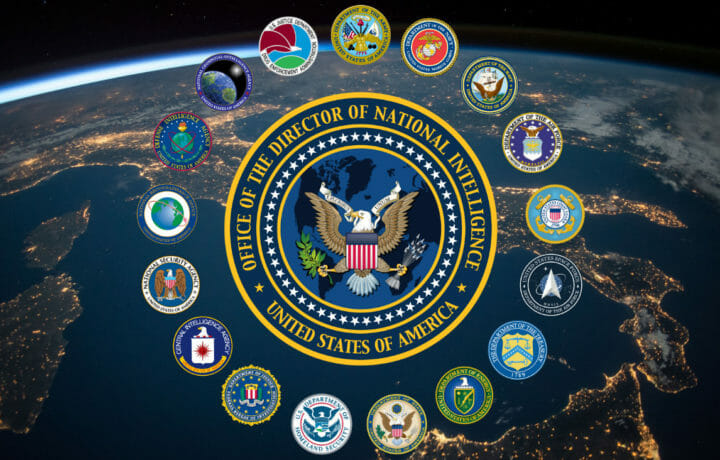
Recruiting for the Intelligence Community is its own kind of challenge.
You are not simply looking for someone who can do the job. You may need a candidate with the right technical background, mission experience, clearance level, polygraph, location … and prior access or eligibility connected to a particular intelligence agency. That can turn an already narrow talent pool into a very specific needle-in-a-haystack search.
ClearanceJobs helps recruiters narrow that search. In addition to searching by keywords, location, clearance level, polygraph, and other candidate criteria, employers can use the IC security clearance search feature to identify candidates who indicate clearances associated with Intelligence Community agencies.
For recruiters supporting intelligence contracts, that extra layer of search precision matters. A candidate who has supported the National Security Agency may bring a different mission background than someone who has worked with the Department of the Army. Both may be highly qualified and hold a TS/SCI, but their agency experience, access, technical environment, and familiarity with the customer can affect how quickly they can support a particular program.
Why Agency-Level Clearance Searching Matters
“Must hold a TS/SCI” rarely tells the entire recruiting story.
Intelligence programs may also require agency-specific eligibility, indoctrination, a certain type of polygraph, or the ability to complete a crossover. Recruiters cannot promise that prior access will transfer, and an agency identifier should never replace a complete security pre-screen. Access decisions remain with the government customer. But knowing that a candidate has previously supported the relevant part of the IC can help a recruiter begin with a more focused and informed conversation.
The IC security clearance search feature on ClearanceJobs can help recruiters:
- Find candidates who indicate experience with a specific intelligence agency.
- Narrow a broad TS/SCI search before reviewing hundreds of profiles.
- Pair agency criteria with polygraph, skills, location and job-category filters.
- Identify talent whose prior mission environment may align with the customer.
- Build reusable talent pipelines for current work, recompetes and future awards.
One important reminder: use the agency filter as a sourcing tool, not as the final security determination. Confirm the candidate’s current clearance status, sponsoring agency, last use, polygraph history, and any program-specific access requirements during the screening process. “Previously supported” and “ready to start Monday” are not always the same thing in the cleared world.
The 18 Members of the U.S. Intelligence Community
The U.S. Intelligence Community is made up of 18 organizations, each contributing a different capability to the broader national security mission.
1. Air Force Intelligence
Led by the Sixteenth Air Force, it provides multisource intelligence, surveillance and reconnaissance, along with cyber, electronic warfare and information operations capabilities.
2. U.S. Army Intelligence and Security Command (INSCOM)
INSCOM conducts worldwide, multidiscipline intelligence and security operations in support of Army, joint, coalition and broader Intelligence Community missions.
3. Central Intelligence Agency (CIA)
The CIA collects foreign intelligence, including intelligence from human sources, analyzes national security information and carries out other intelligence responsibilities directed by national leadership.
4. Defense Intelligence Agency (DIA)
DIA produces military intelligence for warfighters, defense policymakers and force planners, supporting military operations, planning and weapons acquisition.
5. Department of Energy Office of Intelligence and Counterintelligence (DOE-IN)
DOE-IN applies the department’s scientific and technical expertise to intelligence and counterintelligence missions involving nuclear security, energy, technology and other national security priorities.
6. Department of Homeland Security Office of Intelligence and Analysis (DHS I&A)
DHS I&A develops and shares homeland security intelligence with DHS leaders and components as well as state, local, tribal, territorial and private-sector partners.
7. Department of State Bureau of Intelligence and Research (INR)
INR provides all-source intelligence analysis to support U.S. diplomacy and gives State Department leaders independent assessments of global events and foreign policy issues.
8. Department of the Treasury Office of Intelligence and Analysis (OIA)
Treasury OIA analyzes financial intelligence related to national security threats, including terrorism, illicit finance, sanctions evasion and foreign economic activity.
9. Drug Enforcement Administration Intelligence Program
DEA intelligence supports efforts to disrupt drug trafficking organizations and address the national security and public-safety threats tied to the global illegal drug trade.
10. Federal Bureau of Investigation (FBI)
The FBI combines intelligence and law-enforcement authorities to address threats including terrorism, counterintelligence, cybercrime and other dangers to U.S. national security.
11. Marine Corps Intelligence
Marine Corps Intelligence provides intelligence tailored to expeditionary operations and supports Marine Corps planning, training and decision-making across the operating environment.
12. National Geospatial-Intelligence Agency (NGA)
NGA delivers geospatial intelligence by analyzing imagery, maps and location-based data to support policymakers, military operations, navigation and disaster response.
13. National Reconnaissance Office (NRO)
The NRO designs, builds, launches and operates the nation’s reconnaissance satellites and related systems used to collect intelligence from space.
14. National Security Agency (NSA)
NSA leads the nation’s foreign signals-intelligence mission and provides cybersecurity expertise to help protect national security systems.
15. Office of Naval Intelligence (ONI)
ONI produces maritime intelligence on foreign naval forces, technologies and operating environments to support Navy and national security decision-makers.
16. Office of the Director of National Intelligence (ODNI)
ODNI integrates and leads the Intelligence Community, advises the president and National Security Council and helps coordinate national intelligence priorities and resources.
17. U.S. Coast Guard Intelligence
Coast Guard Intelligence supports maritime security, law enforcement and military operations by analyzing threats involving ports, waterways, smuggling, trafficking and other maritime activity.
18. U.S. Space Force Intelligence
Space Force Intelligence delivers intelligence about threats, capabilities and activity in the space domain to support military operations and protect U.S. and allied space interests.
Build the Search Around the Mission
Knowing the agencies is useful. Understanding what each agency does and how that mission translates into talent is where recruiters gain an edge.
An NGA opening may call for GEOINT, imagery, or geospatial data experience. An NSA-aligned role may emphasize SIGINT, cybersecurity, cryptologic work or highly specialized technical skills. A DIA program may need all-source analysts with military intelligence expertise. NRO work can bring space systems, satellite, acquisition and engineering requirements into the mix.
That is why a recruiter should not stop at “TS/SCI” and say, “oh yeah, we’re all good.”
The IC talent pool is specialized, but that does not mean recruiters need to search blindly. The right filters, thoughtful sourcing strategy and informed security screening can help you find candidates who are not only cleared but also much closer to the customer, mission and work you need them to support.
Learn more about conducting candidate searches on ClearanceJobs or request a demo to see how ClearanceJobs can support your cleared recruiting strategy.
Agency descriptions are based on public mission information from the U.S. Intelligence Community.
THE CLEARED RECRUITING CHRONICLES: YOUR WEEKLY RECRUITING TIPS TO OUT COMPETE THE NEXT NATIONAL SECURITY STAFFER.


