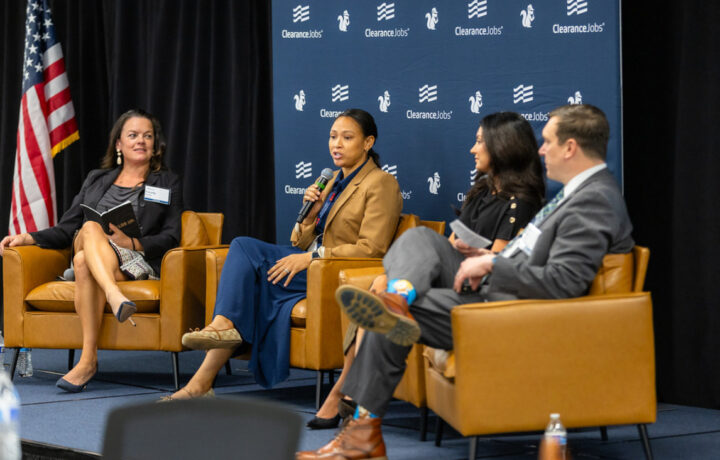
New companies are entering the defense industrial base faster than ever. Many arrive without decades of experience or a ready-made bench of cleared talent. At ClearanceJobs Connect 2026 in Reston, Virginia, a panel of ecosystem leaders talked through what it takes for them to succeed.
Kali Luthra, CEO of Klaim Enterprises, previously ran a Navy-partnered accelerator in Hampton Roads that chose 12 startups out of 150 applicants. The deciding factor, she said, was whether the technology actually works operationally rather than just in a pitch deck. She also warned founders to plan for slow government payment cycles by keeping commercial revenue in the mix.
Toi Hunter of the Virginia Economic Development Partnership described Hampton Roads’ recent pivot. The region now focuses on defense, energy, aerospace, and logistics, building on its shipbuilding legacy. For companies that say they can’t find people, Hunter pointed to regional workforce boards, which offer free services such as job fairs, job description writing, and training support. She also cited the roughly 12,000 service members who leave the military each year as a pipeline Virginia works hard to keep.
Felicity Amos, director of partnerships at Grist Mill, sees the biggest hiring gap in hardware. Companies need people who can take prototypes to production. She suggested recruiters look beyond the primes to commercial shipbuilding, space, and industrial automation, and use transition programs like SkillBridge.
Moderated by Luke Shabro of Wayfinder Strategies, all three panelists gave the same advice to people leaving government service: keep your clearance. Hunter noted that companies Virginia is recruiting are asking specifically for cleared workers. Luthra added that the most successful startups in her cohorts were the ones that held clearances.
Their final advice was to network relentlessly, join professional associations, and look for ways to give back. As Amos put it, people remember the ones who help.


