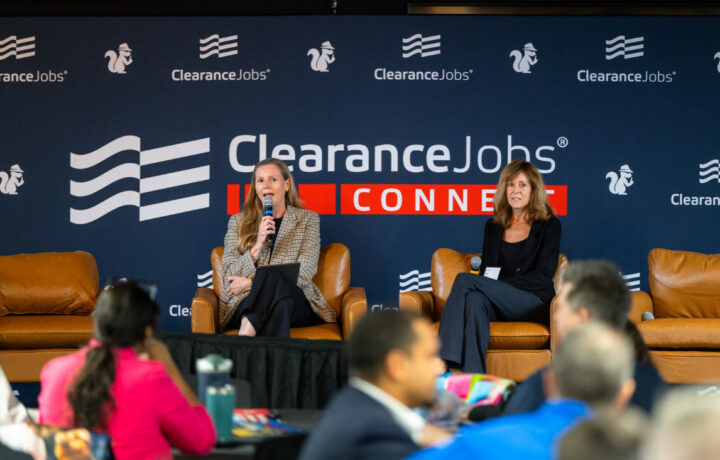
Terri Powers did not plan a career in national security. She was a first-generation college student from Clarion, Pennsylvania, and she had no clear way to pay for school. Then CIA recruiters came to campus and offered tuition help. She was 17, so her parents had to sign a waiver before she could take her polygraph. She started as a secretary, took night classes, and kept moving up. Twenty years later she was the CIA’s director of personnel, the office she had once supported as a secretary.
At ClearanceJobs Connect 2026 Reston, Powers spoke with ClearanceJobs Policy Advisory Council member Jamie Jones Miller about the four Rs of recruiting: rebuild, retool, re-skill and retain. Powers has changed careers twice without leaving her employer. After HR, she became deputy director of security by showing what she already offered: experience with employee grievances and with compensation, which security needed.
Now vice president of global security operations at Leidos, she told recruiters that a clearance and a qualification are not the same thing. Adaptability, willingness to learn and comfort with risk often matter more than checking every box on a job requisition. She also explained how Leidos keeps cleared talent. Every new security opening is sent automatically to the whole security team, so employees can see where they could go next instead of leaving for another company.
Powers also said security and recruiting need to work more closely together. Fake candidates show up every day, so recruiters are now asking applicants to turn their cameras on and show ID. In her words, retention starts at recruitment.
Her last piece of advice added a fifth R: risk. Recruiters should take calculated chances on candidates who are eager to learn. That approach pays off when the candidate also has a clearance and the company can keep them.


