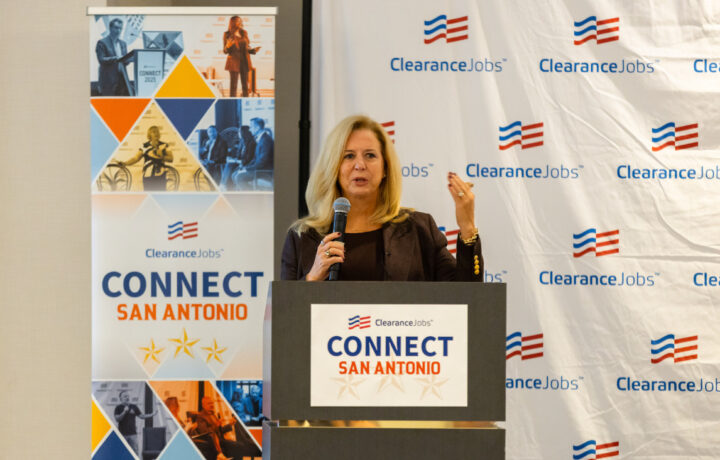
At ClearanceJobs Connect San Antonio, intelligence veteran Ellen McCarthy opened the day with a keynote that linked World War II–era espionage to today’s AI-driven talent landscape.
McCarthy began with a story from 1940, when President Franklin D. Roosevelt felt “blind” heading into war and turned to William “Wild Bill” Donovan to build something that didn’t exist: an organization that could collect, analyze, and share information leaders could trust. Donovan’s Office of Strategic Services (OSS) became the forerunner of today’s special operations forces, the CIA, and the State Department’s Bureau of Intelligence and Research.
More important than structure, McCarthy emphasized, was culture. Donovan recruited journalists, professors, artists, athletes, and women—people who thought differently and shared a commitment to truth. His primary selection criterion wasn’t skill; it was character.
McCarthy argued that cleared recruiters today stand in a similar moment of transformation. Institutions built in the World War II era are being challenged by AI, quantum technologies, and a public that demands transparency at speed. Trust in most institutions is declining, she noted, turning every hiring decision into a trust decision, not just a business one.
In an age where AI can generate flawless résumés and polished cover letters, recruiters’ ability to sense authenticity, spot “hunger,” and evaluate integrity becomes a national security function. McCarthy urged talent professionals to recruit for difference, not sameness—building teams around shared purpose and diverse perspectives.
She closed by reminding the audience that trust is not static; it is built, tested, and rebuilt over time. In a world of deepfakes and information overload, authentic human judgment is the last line of defense. Cleared recruiters, she said, are quietly “building the next phase of democracy” by choosing who gets to serve, lead, and protect.


