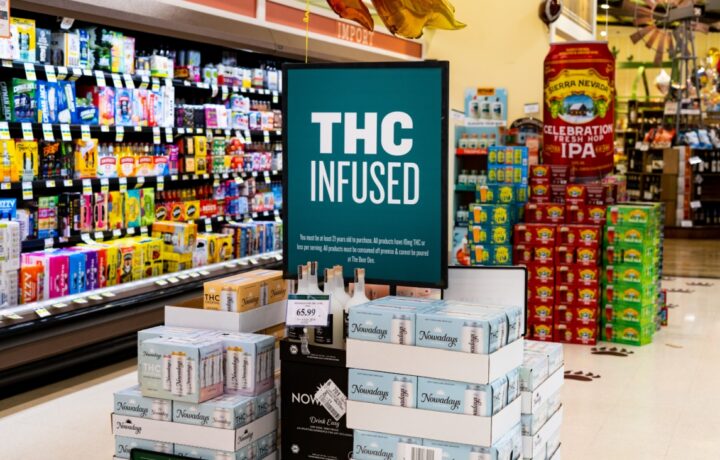
Walk into a grocery store, convenience store, or specialty beverage shop today, and you will find a growing selection of THC-infused drinks marketed as alternatives to alcohol. Often sold in attractive packaging and promoted as hemp-derived products, these beverages are becoming increasingly popular across the country.
For security clearance holders and applicants, however, the availability of these products can create a dangerous misconception: that if a THC-infused drink is sold legally in a store, it must be safe from a security clearance perspective. That is not the case. While THC-infused beverages may be legal under certain state laws or hemp regulations, their use can still present significant risks for individuals seeking to obtain or maintain a security clearance.
The Availability of THC Does Not Eliminate the Risk
One of the most common misconceptions among clearance holders is that legality equals acceptability by security clearance adjudicators.
Security clearance determinations are based on federal standards, such as Security Executive Agent Directive 4 (SEAD 4), not whether a product can be purchased legally in a particular state.
Many THC-infused beverages are marketed as hemp-derived products containing Delta-9 THC or similar cannabinoids. Because these products are often sold outside of traditional marijuana dispensaries, consumers may incorrectly assume they are treated differently from marijuana.
From a security clearance standpoint, however, the focus remains on the underlying substance and its potential impact on judgment, reliability, and compliance with federal standards.
The Drug Testing Problem
Perhaps the greatest risk for clearance holders is the possibility of testing positive for THC as a result of having a few THC-infused drinks at a weekend party.
Many individuals are surprised to learn that a legally purchased beverage can produce the same result on a drug screening as marijuana use and can cause the loss of a security clearance under Guideline H.
Even products marketed as compliant with federal hemp laws may:
- Contain measurable THC
- Vary in potency from batch to batch
- Result in positive drug test results
- Create uncertainty regarding what was actually consumed
When a positive drug test occurs, the fact that the THC came from a beverage purchased at a local store may provide little comfort during a security clearance review. I have been before many security clearance adjudicators on such issues, and the source of the THC has not typically been a major factor in their decisions; it is the test result.
Federal Law and Agency Policies Still Matter
Despite changing state laws and the growth of the hemp industry, many federal agencies continue to view THC use as a significant security concern. Security clearance adjudicators evaluate this conduct under Guideline H (Drug Involvement and Substance Misuse). The analysis often focuses on:
- Recency of use
- Frequency of use
- Intent to continue using
- Overall judgment and reliability
The availability of THC-infused beverages has not fundamentally changed these considerations.
The Marketing Challenge
Part of the confusion stems from how these products are marketed. When I was in a large wine store today, I saw that one-half of the space previously reserved for regular canned mixed drinks was replaced with new THC-infused drinks. The marketing was clearly top-notch. As a result, I thought that this article might serve as a cautionary warning. One just naturally assumes that if a major grocery or alcohol chain is selling THC-infused drinks, that the government would not have issues with security clearance holders drinking them. Unfortunately, that is not the case right now.
Manufacturers often emphasize:
- Hemp-derived ingredients
- State legality
- Low THC concentrations
- Wellness or lifestyle benefits
What is frequently absent from the marketing, however, is any discussion of employment and security clearance consequences. It is the failed drug test, or perhaps admissions of some sort during the polygraph process, that could lead adjudicators to raise negative security clearance concerns. I have had federal agencies, in CBD gummy cases, ask me how we can prove the exact THC content of a gummy. This can be a tough question.
Clearance holders should remember that a product’s advertising claims do not determine how a security clearance adjudicator will evaluate its use. In other words, be careful out there.
Final Thoughts
THC-infused beverages are becoming more common and more accessible. Their presence in mainstream retail stores may create the impression that they are low-risk products.
For security clearance holders (and even employees), however, the analysis remains largely unchanged. The fact that a THC-infused drink is legal, hemp-derived, or sold at a local store does not necessarily protect an individual from the consequences of a positive drug test or security clearance scrutiny.
As these products continue to grow in popularity, clearance holders should approach them with caution and understand that these consumer trends do not automatically change federal security standards. Hopefully, the President and/or Congress will take some action soon to clarify these areas (or at least provide a safe harbor for clearance holders) to reduce these risks.
This article is for informational purposes only and should not be construed as legal advice. Security clearance rules, federal and state laws, and agency policies may change, and readers should consult counsel regarding their specific circumstances.


