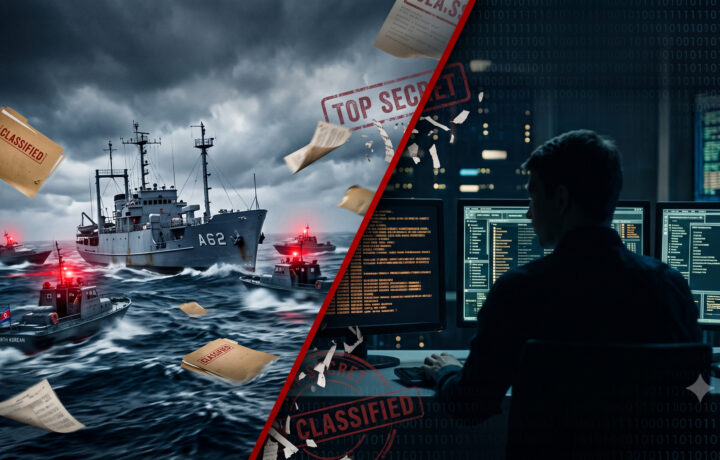
The history of American intelligence is filled with moments when classified information changed the course of history. Few incidents illustrate that more clearly than the capture of the USS Pueblo and the Chelsea Manning leaks.
On this episode of Secret Squirrel Files, hosts Phoebe and Katie explore two intelligence failures separated by more than four decades but united by a common thread: the loss of sensitive information.
Phoebe begins with the dramatic story of the USS Pueblo, an American intelligence collection ship captured by North Korea in January 1968. As enemy patrol boats closed in, the crew raced to destroy thousands of classified documents, codebooks, and intelligence materials. Despite their efforts, much of the information remained aboard when North Korean forces seized the ship. Eighty-two crew members spent nearly a year as prisoners of war, while the Pueblo itself remains in North Korea today—the only commissioned U.S. Navy vessel still held by a foreign nation.
Katie then shifts to one of the most influential insider threat cases in modern history. In 2010, U.S. Army intelligence analyst Chelsea Manning disclosed hundreds of thousands of classified battlefield reports, diplomatic cables, and military documents to WikiLeaks. The disclosures sparked worldwide debate over transparency, national security, and whistleblowing while exposing weaknesses in how classified networks were monitored.
The case fundamentally changed how government agencies approach insider threats. Enhanced auditing, behavioral monitoring, stricter access controls, and mandatory insider threat training all grew from lessons learned after the leaks.
Together, these stories highlight two very different paths by which America’s secrets escaped—one through capture during an international crisis and the other through an authorized insider. They also demonstrate why protecting classified information remains a cornerstone of national security, whether aboard a Cold War spy ship or inside today’s digital intelligence networks.


