An F-16 Fighting Falcon from the United States Air Force’s aerial demonstration team crashed in California on Wednesday morning in the California desert about 180 miles north of Los Angeles.
“On December 3, 2025, at approximately 10:45a.m., a Thunderbird pilot safely ejected from a F-16C Fighting Falcon aircraft during a training mission over controlled airspace in California,” announced the 57th Wing Public Affairs Office from Nellis Air Force Base (AFB), Nevada, the home facility of the United States Air Force Air Demonstration Squadron, more famously known as the Thunderbirds. “The pilot is in stable condition and receiving follow-on care.”
The cause of the accident was not immediately clear, and the incident is under investigation.
Fighting Falcon Down – What We Know
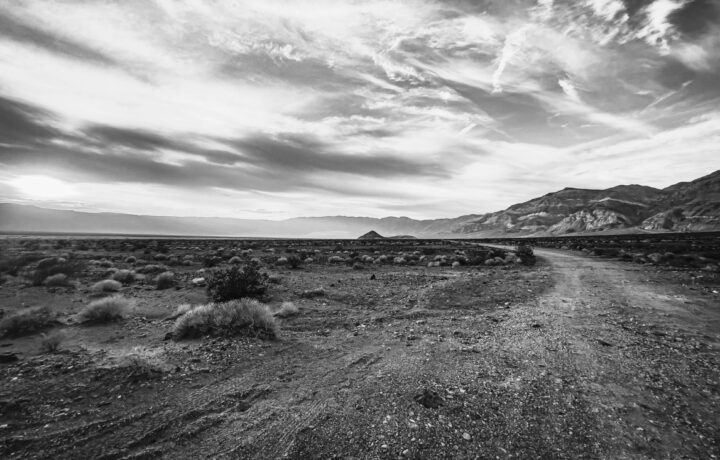
According to reports, the single-engine, single-seat F-16 crashed into a dry lake bed in the Mojave Desert about two miles south of the Trona airport near the unincorporated community of Trona. An explosion was heard in the area, and a plume of smoke was seen, according to first responders and witnesses.
A video circulating on social media showed the pilot’s parachute after he safely ejected from the aircraft.
“Solo occupant was (the pilot, who was treated and transported by on scene personnel for non-life-threatening injuries and is being transported to an area hospital,” the San Bernardino County Fire Department confirmed in a statement to the media.
The SBCFD added that there was no threat to the surrounding vegetation from fire nor to the community, but urged the public to avoid the area.
A United States Navy F/A-18 Super Hornet had previously crashed near Trona in 2022, killing the pilot. Four years earlier, a Thunderbird pilot was killed during training in Nevada while performing a split-S routine after he lost consciousness and control of his F-16 Fighting Falcon.
About The Thunderbirds
Formed in 1953, the Thunderbirds’ mission is to recruit, retain, and inspire past, present and future Airmen while showcasing the pride, precision and professionalism of America’s Airmen. 2025 marked the Thunderbirds’ 72nd year representing the United States Air Force, with the team performing more than four dozen flight demonstrations at locations across the United States and Canada.
The Thunderbirds squadron is an Air Combat Command unit composed of eight pilots—including six demonstration pilots—four support officers, three civilians, and more than 130 enlisted personnel performing in 25 career fields. The team performs approximately 30 maneuvers in a demonstration, while an entire show, including ground and air, runs about an hour and fifteen minutes. The Thunderbirds also demonstrate the capabilities of the F-16 Fighting Falcon multirole jet fighter.
Its Demonstration season runs from March to November, with the winter months used to train new members.
This is also the most recent incident this year involving the aerial demonstration team. In August, while the Thunderbirds were practicing for the Chicago Air and Water Show, reports surfaced that one of the F-16 Fighting Falcons “went supersonic,” shattering windows in buildings on the Windy City’s North Side near Lake Michigan. The Air Force denied that any aircraft went supersonic, even as residents claimed to have heard two loud blasts near North Lake Shore Drive.
The US Air Force’s F-16 Falcons can reach a maximum speed of 1,500 mph (Mach 2) at altitude, but at air shows, the team stays below Mach 1, or the speed of sound. During some maneuvers, notably flat passes, a solo Fighting Falcon can reach speeds around 700 mph, just enough to avoid creating the sonic boom.
According to The New York Times, citing 2021 estimates, each F-16C costs around $18.8 million.


