As social media becomes a daily part of professional life, it also brings increased risk from fake accounts used for social engineering, phishing, and other malicious activities. Those risks are now impacting the way recruiters engage cleared talent — especially professionals connected to the DoD and the Intelligence Community (IC).
Fake LinkedIn profiles are creating new obstacles in recruiting for defense and national security roles. These phony accounts not only make cleared professionals understandably cautious about connecting with strangers online, but they also waste recruiters’ time when interactions turn out to be nothing more than bots, impostors, or scams.
Instances of bad actors posing as legitimate recruiters or industry professionals make cleared candidates more wary of unsolicited messages. Whether it’s foreign adversaries masquerading as defense professionals or fraudulent accounts aiming to collect personal data, the uncertainty has added an extra layer of friction to outreach efforts.
The Problem with Fake LinkedIn Accounts
Fake LinkedIn profiles can look surprisingly believable. Some have seemingly legitimate photos, multiple connections, and endorsements — all designed to lend credibility. But they can be used to extract sensitive information, make phishing attempts, or simply waste recruiters’ time.
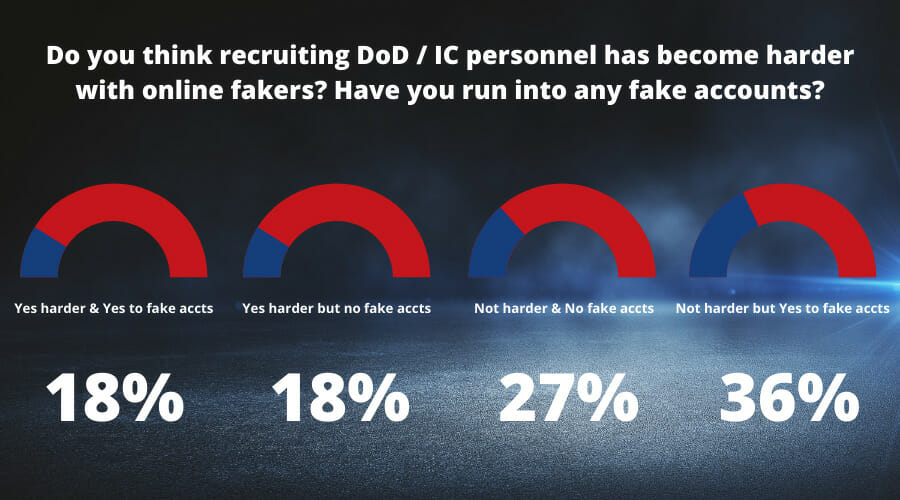
Feedback from recruiters suggests mixed experiences: while some report frequent encounters with fake profiles, others say they haven’t noticed significant issues. This variation highlights how pervasive — yet hard to quantify — the fake account problem really is.
Tips to Spot a Fake Profile
While working on open social platforms, recruiters and cleared professionals can take steps to identify suspicious accounts:
- Check for poor spelling or grammar. Frequent errors can be a red flag.
- Be wary of unexpected cluster connections. Multiple invitations from unknown profiles at the same organization may signal fake accounts.
- Look closely at profile photos. A quick reverse image search can reveal if the photo appears elsewhere online.
- Consider the level of detail. Sparse profiles with generic job descriptions are often suspect.
What This Means for Recruiters
Ultimately, fake LinkedIn accounts don’t just complicate recruiting — they erode trust. Security clearance holders have become more cautious about who they engage with online, and recruiters must spend extra effort vetting connections before moving forward. This underscores the benefit of using more verifiable hiring sources and professional networks specifically geared toward cleared talent.
THE CLEARED RECRUITING CHRONICLES: YOUR WEEKLY DoD RECRUITING TIPS TO OUT COMPETE THE NEXT NATIONAL SECURITY STAFFER.


