
His morning started off with a courtesy phone call from Thames Valley Police. Andrew Mountbatten-Windsor (formerly known as the Duke of York, Prince Andrew) was advised that the police were on the way to his Sandringham Estate. It was not quite the birthday surprise one expects, as Mountbatten-Windsor celebrated his 66th birthday. His estate was searched, and he was arrested on suspicion of misconduct in public office.
Police arrived at Wood Farm on the Sandringham Estate shortly after 0800 hours, taking him into custody for questioning before releasing him under investigation later that evening. British media observed that it was a moment without precedent in modern royal history: a former senior royal, once shielded by title and tradition, now answering to the same laws as any other citizen.
The King has spoken on the matter. 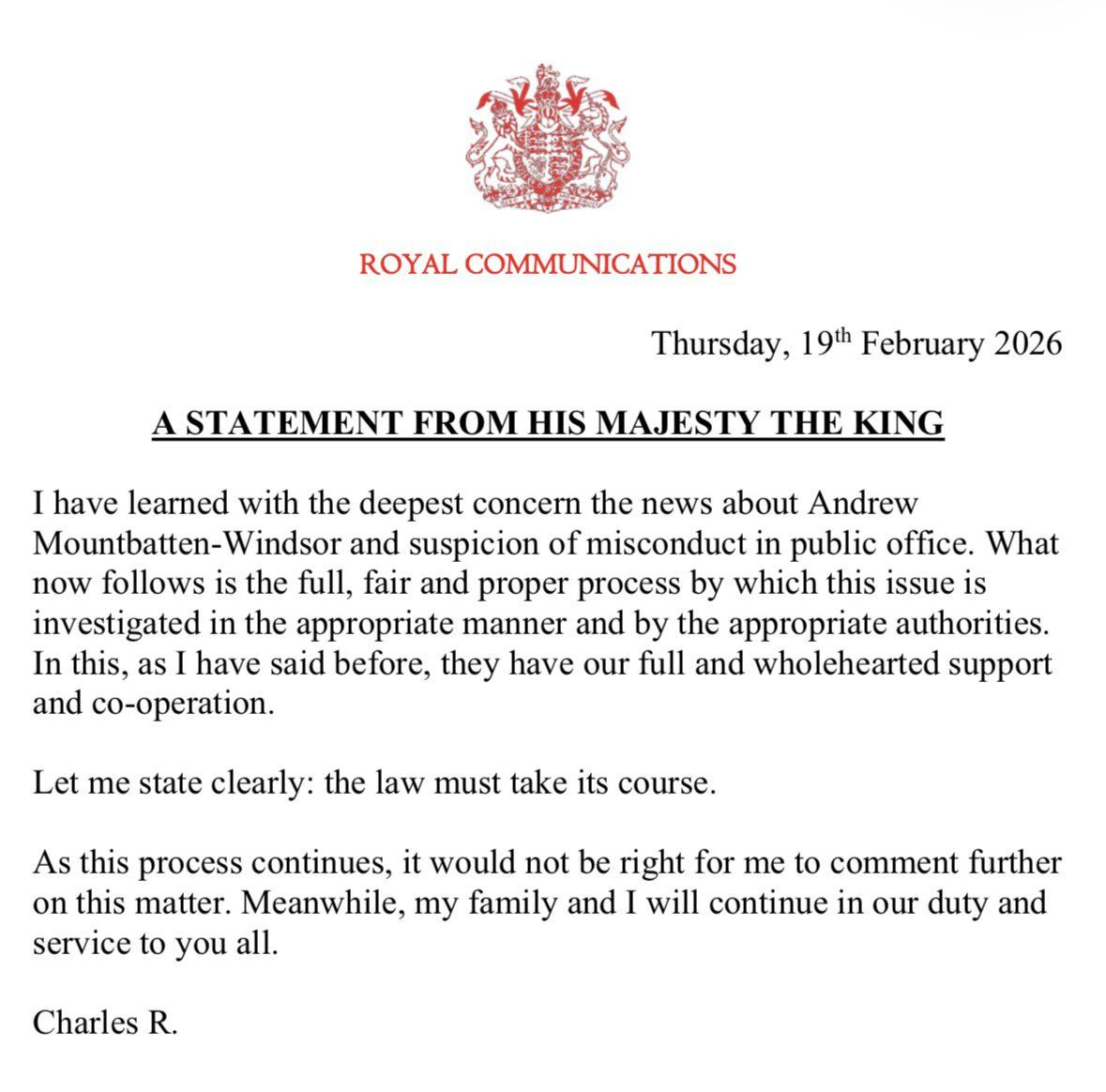
The Alleged Crime
The alleged offense is narrow yet in the UK legal system quite serious. Detectives are examining whether Mountbatten‑Windsor, during his tenure as a UK trade envoy, shared confidential government information with Jeffrey Epstein. The material under scrutiny includes:
- Internal UK government trade mission reports (Hong Kong, Vietnam, Singapore)
- A confidential UK government briefing on Helmand Province reconstruction investment
- Government emails and attachments forwarded or shared improperly
All information which should never have been accessible to a private individual. Under British law, misconduct in public office is a grave offense, carrying a maximum sentence of life imprisonment when the abuse of authority is deliberate and the breach of trust is substantial.
How Investigators Discovered the Alleged Misconduct
The discovery of the alleged misconduct began with the release of millions of pages of Epstein‑related documents by the U.S. Department of Justice. Among the files were emails and communications suggesting that Mountbatten‑Windsor forwarded or facilitated the forwarding of sensitive government material to Epstein through intermediaries.
UK police forces, including the Thames Valley, the Metropolitan Police, and Surrey Police formed a joint assessment team to review the documents. After days of analysis, investigators concluded that the threshold for arrest had been met. Search warrants were executed at multiple properties, including Sandringham and Royal Lodge in Berkshire, as officers sought corroborating evidence. The Home Office was notified shortly before the arrest, a procedural step that underscored the seriousness of the operation. The case continues to evolve, yet also offers a real-time illustration of how insider risk materializes when privileged access meets personal opportunity.
When Insiders Break Trust
The arrest in the UK reminds us how truth transcends titles, institutions, and national borders: insiders, even those in exalted positions, can break trust for reasons that seem rational to them in the moment. Proximity to power does not immunize anyone from the temptations that come with access, influence, and the illusion of untouchability. The essence of insider risk is not malevolence but opportunity. The opportunity dynamic illustrates how some believe that one can bend rules without consequence, that one’s status provides a buffer, that the national interest is elastic enough to accommodate personal relationships or private advantage.
When those entrusted with sensitive information forget that their duty is to the public, not to themselves or their associates, the damage is not only operational but cultural. It erodes coherence within institutions and corrodes the expectation that those who serve do so with integrity. The Mountbatten‑Windsor case is not an anomaly; rather it is a reminder that insider compromise is a human vulnerability, not a structural one.
What Comes Next
Police have stated that Mountbatten‑Windsor remains released under investigation, a status that allows detectives to continue gathering evidence without imposing restrictions on his movements. Prosecutors will ultimately decide whether the material meets the threshold for formal charges. They have emphasized that no timeline has been set and that the decision will rest solely on evidentiary sufficiency.
The broader lesson extends far beyond this individual case. Insider risk is universal. It is not confined to governments, corporations, or royal households. It emerges wherever coherence is ruptured, where trust, access, and opportunity intersect. The arrest of Andrew Mountbatten‑Windsor is a reminder that no system, no matter how venerable, is immune to the vulnerabilities created by human behavior. Institutions that fail to recognize this reality do so at their own peril.


