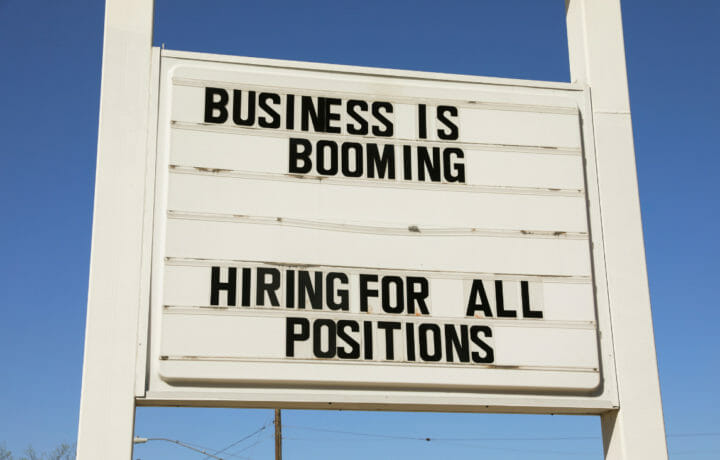
The federal government is looking to rebuild some of its technology expertise through a new hiring push led by the Office of Personnel Management (OPM). The agency is beginning to issue offers for its new “Tech Force” initiative, which aims to bring software engineers, data scientists, and other technologists into government for short-term tours focused on modernizing federal systems and tackling complex digital projects. Participants will typically serve two- to four-year assignments working across agencies on initiatives such as AI adoption, data modernization, and IT upgrades.
The effort also draws on earlier models that brought private-sector tech talent into government, including the U.S. Digital Service and other digital modernization teams that historically worked on high-impact projects like fixing Healthcare.gov and improving federal online services. Officials say the goal is to revive and scale those types of initiatives by recruiting specialized technical talent that can quickly support agency missions and help modernize government technology infrastructure.
Layoffs: Morgan Stanley
Morgan Stanley is preparing to cut about 2,500 jobs—roughly 3% of its global workforce—as layoffs continue to ripple through the financial sector. The reductions will affect employees across the bank’s major divisions, including investment banking, wealth management, and investment management, and will occur in both U.S. and international offices. While the firm hasn’t publicly detailed every role affected, reports indicate that the cuts largely target corporate and back-office functions rather than client-facing financial advisors.
The move comes despite a strong financial year for Morgan Stanley, which posted record revenue in 2025. Analysts say the layoffs reflect broader efforts across Wall Street to streamline operations and adjust staffing after rapid hiring during the pandemic era. Similar workforce reductions have been reported at other financial firms as banks look to improve efficiency and adapt to shifting market conditions and evolving technologies.
Hiring: CesiumAstro
CesiumAstro announced plans to expand its headquarters and advanced manufacturing operations in Bee Cave as part of a $500 million investment aimed at scaling U.S. production of satellite communications systems used in aerospace and defense missions. The expansion will support engineering, manufacturing, and testing operations for next-generation satellite hardware and AI-enabled communications technology used by government and commercial customers.
The project is expected to create more than 500 high-skill jobs over the next several years, including roles in aerospace engineering, embedded software, satellite manufacturing, and systems integration. As the U.S. works to strengthen domestic space and defense capabilities, companies like CesiumAstro are expanding production capacity and talent pipelines to support both Department of Defense and broader national security missions.
Cleared Employer at Work: ClearanceJobs
ClearanceJobs is the largest career network for professionals with federal government security clearance. Find defense and intelligence jobs requiring security clearance. Put your security clearance to work, join today.
SPONSORED CONTENT: This content is written on or behalf of our Sponsor.
Opportunity to Watch
NASA is ramping up hiring as it works to rebuild its workforce and accelerate plans to return astronauts to the moon under the Artemis program. The agency has launched two new initiatives aimed at strengthening mission-critical expertise and bringing in fresh talent from industry. One effort will convert some long-time contractors—particularly in areas like mission control in Houston—into full civil service roles, helping NASA rebuild core capabilities inside the agency itself.
A second initiative, called “NASA Force,” is designed to recruit experienced professionals from the private sector for two-year assignments to support key projects and mentor younger employees. The program comes after a turbulent year that included leadership gaps, a government shutdown, and workforce reductions that saw thousands of civil servants leave the agency. Officials say the hiring push is part of a broader effort to strengthen NASA’s workforce and support a faster launch cadence as the U.S. works toward a sustained human presence on the moon later this decade.


