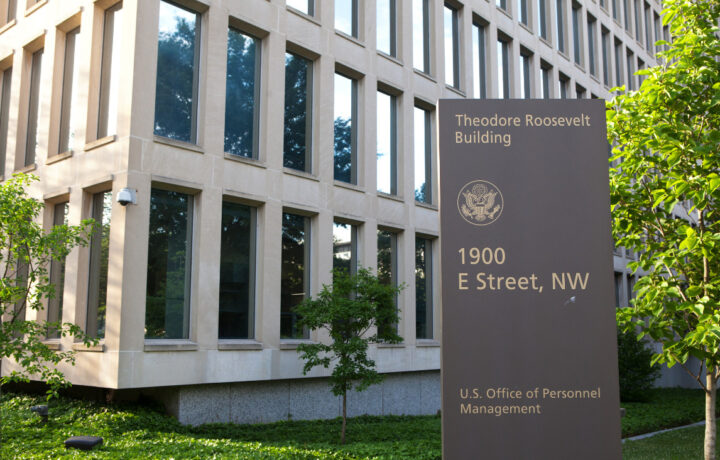
The Office of Personnel Management (OPM) is proposing a new government-wide rule that would require federal employees to sign a non-disclosure agreement (NDA), raising questions across both the federal and national security workforce.
While the proposal has sparked concern online, the reality is that for security clearance holders, NDA requirements are nothing new.
Individuals granted access to classified information already sign the SF-312 Classified Information Nondisclosure Agreement, acknowledging their responsibility to protect sensitive national security information. The proposed OPM rule appears to expand that philosophy beyond the cleared community and into the broader federal workforce.
According to the proposed rule, employees would be prohibited from disclosing “government confidential information.” That phrase, however, is where much of the debate currently lives.
What exactly qualifies as “government confidential information”? Critics argue the term needs further clarification before any final rule is implemented. Some observers see parallels to Controlled Unclassified Information (CUI), while others note that existing laws, including the Privacy Act, already govern many forms of sensitive government data.
The proposal also reflects a larger trend inside government modernization efforts like Trusted Workforce 2.0, where distinctions between the traditional security clearance population and broader suitability or public trust roles are becoming less defined. Continuous vetting initiatives and expanded insider threat concerns are pushing agencies to rethink how all government personnel handle sensitive information.
Recent leaks involving personnel records and internal government operations have only intensified those concerns.
Questions also remain about whether contractors could eventually be included under similar requirements. For now, the rule is still in the proposal stage and open for public comment.
Regardless of the final language, the discussion serves as a reminder that government work — even outside classified environments — often involves access to sensitive information that agencies do not want publicly disclosed.
For cleared professionals, it’s a familiar concept. For the broader federal workforce, it may represent a significant cultural shift.


