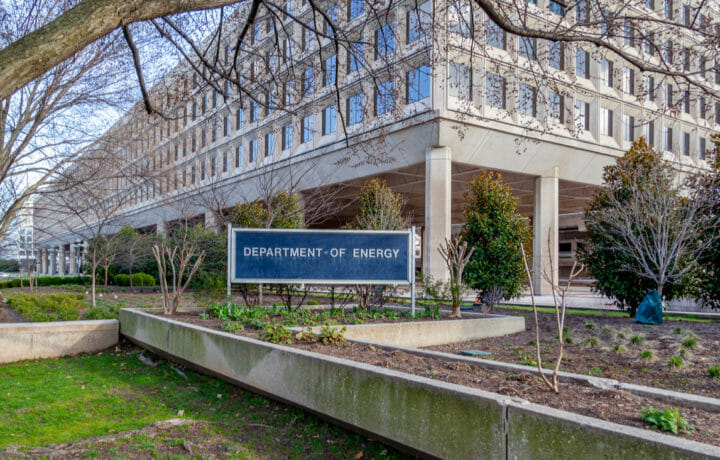
The biblical phrase “beating swords into plowshares” continues to be used to describe the conversion of military weapons and technologies into peaceful civilian applications. It is now being taken to a new extreme as the United States Department of Energy announced last week that it had selected five companies to use surplus weapons-grade plutonium for fuel for civilian reactors.
The five companies entering advanced negotiations include Oklo, Exodys Energy, Shine Technologies, Standard Nuclear, and Flibe Energy, Inc.
Surplus Plutonium – Yes, There is a Surplus!
According to a report from the Government Accountability Office (GAO), the United States currently has more than 50 metric tons of surplus weapons-usable plutonium. Of that, approximately 34 to 38 metric tons is actively designated for long-term disposition. The DOE has declared it has 61.5 metric tons of weapons-grade plutonium as surplus, beyond the national security needs.
Much of the material is currently held at heavily guarded weapons facilities. The DOE holds this material at heavily guarded weapons facilities, including the Savannah River Site in South Carolina, the Pantex Plant in Texas, and Los Alamos National Laboratory in New Mexico.
The long-standing policy has been to convert the plutonium into oxide form, dilute it, and then bury it at the Waste Isolation Pilot Plant (WIPP) in New Mexico. Now the DOE is exploring options to process the surplus plutonium, typically used in the manufacture of nuclear weapons, into nuclear fuel for reactors.
Critical Response
In March, the White House issued an executive order directing the department to halt an existing program that was charged with diluting and disposing of the material.
President Donald Trump’s Executive Order 14302, “Reinvigorating the Nuclear Base,” ordered the DOE to halt its Biden-era “dilute and dispose program” and to “establish a program to dispose of surplus plutonium by processing and making it available to industry in a form that can be utilized for the fabrication of fuel for advanced nuclear technologies.”
Critics have warned that repurposing plutonium for civilian energy still carries serious risks.
“Plutonium-based fuels and reprocessing have a poor track record when introduced in civilian nuclear energy programs,” Ernest Moniz, who was energy secretary under former President Obama, wrote in an op-ed for the Nuclear Threat Initiative (NTI) last year.
Moniz argued that it could “Lead to the creation of additional stocks of weapons-usable materials” and “Encourage states without nuclear weapons to develop and deploy technologies that are usable in nuclear weapons programs.” He further cautioned that the efforts would “Produce new radioactive waste streams that must be managed, at considerable cost and risk,” or “Elevate the risk of a safety or security incident at a nuclear facility.”
The Five
The five named companies are now in talks with the DOE as part of the Surplus Plutonium Utilization Program.
“Fuel supply constraints are a key throttle to advanced reactor development,” said Oklo CEO Jacob DeWitte. “This program creates a pathway to use existing surplus material as bridge fuel for advanced reactors to bring more reactors on line sooner. Material that has been set aside for disposal can instead be converted into fuel to produce electricity through fission.”
Oklo is now working with Newcleo, a Europe-based developer of advanced reactors and MOX nuclear fuel, on the program.
Alabama-based Flibe Energy is exploring how surplus plutonium could be used in the lithium fluoride thorium reactor technology it is developing.
“This opportunity aligns with our focus on utilizing materials in spent nuclear fuel to sustain future reactors,” said Flibe CEO Kirk Sorensen. “The program will help unlock new advancements in modern nuclear power technology and provide a real benefit to the citizens of the United States. We are grateful to the DOE for the opportunity to put this marvelous resource to its most productive use.”
The Surplus Plutonium Utilization Program is being led by the DOE’s Office of Nuclear Energy.


