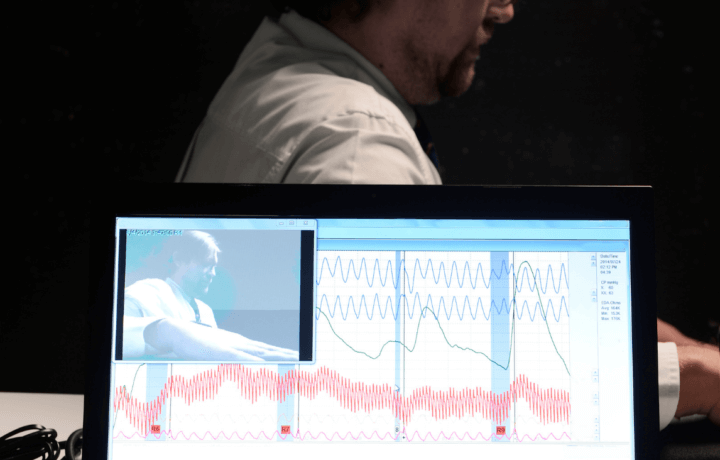
Polygraph exams are one of the most misunderstood parts of the security clearance process. Whether you’ve heard stories from coworkers or spent hours reading online forums, it’s easy to build up anxiety before your appointment. The good news is that most concerns stem from misconceptions, not reality. While the experience can be stressful, the purpose of the exam isn’t to trick you, it’s to help resolve security concerns and assess the credibility of the information you’ve provided.
Psych Evals and Polygraph Examinations
One ClearanceJobsBlog subscriber writes:
I’m a college grad and I’m going through the security clearance process for a 3-letter agency. I got through the sf-86, investigator, and now got my poly and psych soon for a TS/SCI with poly. The thing is I am a bit nervous about the entire thing and even reading over the pamphlet about the poly and stuff still doesn’t ease my nerves. What do they even ask about? How does the psych evaluation even work? Do they just keep on asking you stuff to see if you’re mentally capable/stable? Also, I just got into a relationship literally a couple weeks after my discussion with the investigator, and the person I’m with is a foreign national who is pending their green card. I know I have to disclose this info, but would I get penalized about this? Would software / tv show piracy fall under misuse of IT systems? Finally, I’ve taken edibles twice and never intended to, it was stupid, but would they penalize me for it? I mentioned it in my sf-86 and discussed it with the investigator, but would they try to paint me as a drug lord or some?
What to Expect
It’s pretty common to be anxious about both the polygraph and the psychological evaluation, especially if it’s your first time. The biggest piece of advice is not to try to “game” either process.
For the psychological evaluation, they’re generally looking at whether you can reliably safeguard classified information, not whether you’re a “perfect” person. Seeking counseling, taking medication, or experiencing normal life stressors aren’t automatic disqualifiers. In many cases, proactively addressing mental health concerns reflects positively on judgment and responsibility.
1. The polygraph.
The examiner will review topics already covered in your SF-86, such as foreign contacts, drug use, criminal activity, handling of classified information, and honesty. The goal isn’t to surprise you with trick questions, it’s to resolve security concerns.
2. The psychological evaluation.
This is generally an interview with a licensed psychologist who assesses judgment, reliability, emotional stability, and your ability to safeguard classified information. It’s not designed to “fail” people simply for experiencing normal stress or anxiety.
3. Your new relationship.
Yes, disclose it. A new relationship with a foreign national isn’t an automatic disqualifier. What matters is being transparent and reporting it as required. Country and their ties matter, too.
4. Software or TV piracy.
It could be relevant if asked about illegal computer activity or misuse of IT systems. As with everything else, answer honestly if the topic comes up.
5. Edibles.
Since you already disclosed the two instances on your SF-86 and discussed them with your investigator, consistency is key. Occasional past marijuana use, particularly when fully disclosed, is generally viewed much more favorably than attempting to hide it.
Honesty is Your Best Friend
As for the polygraph, consistency and honesty are your best friends. Review your SF-86 beforehand so your disclosures are fresh in your mind, answer only the question that’s asked, and don’t feel like you need to volunteer unrelated information. If you don’t understand a question, ask for clarification before answering.
Finally, remember that being nervous is expected. Polygraph examiners see anxious candidates every day, and simply being anxious doesn’t mean you’ve failed. Focus on being truthful and consistent rather than trying to control your physiological responses.
Much about the clearance process resembles the Pirate’s Code: “more what you’d call guidelines than actual rules.” For this reason, we maintain ClearanceJobsBlog.com – a forum where clearance seekers can ask the cleared community for advice on their specific security concerns. Ask CJ explores questions posed on the ClearanceJobs Blog forum, emails received, and comments from this site. This article is intended as general information only and should not be construed as legal advice. Consult an attorney regarding your specific situation.


