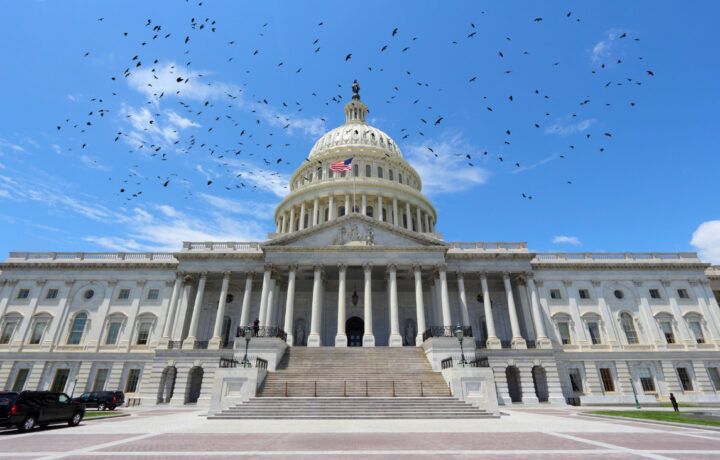
For many first-time security clearance applicants, the hardest part of the process isn’t filling out the security clearance application or sitting through the background interview. It’s the waiting that comes afterward. Weeks can quickly turn into months with little or no communication, leaving candidates wondering whether their case is moving forward or stalled indefinitely. When the silence stretches past the expected timeline, many begin asking the same question: Is it time to contact my member of Congress?
One ClearanceJobsBlog community member, more than 250 days removed from submitting their SF-86 and 200 days after their subject interview, turned to the forum for guidance. The discussion highlights a common frustration among clearance applicants and offers practical insight into what a congressional inquiry can, and can’t, do during the security clearance process.
I’m a civilian engineer at a DoD contractor waiting for my security clearance. My team is heavily dependent on high-side work, and my clearance timeline is starting to have a negative effect on my role (not being able to help with deadlines), and may soon mean that I am placed on other work that would not be nearly as helpful toward my career. However, I am patiently waiting and hoping I hear good news soon.
A summary of my timeline:
– October, 2025: SF-86 Submitted
– December, 2025: Notification of “Eligibility Pending” (I assume just means not offering an Interim clearance), then two week later, interview with investigator. They told me they would only reach out to one reference and they did within the week.
– May, 2026: Made a request to my FSO for an update and they told me my Eligibility Pending means they cannot request an update from DCSA. FSO mentioned that Eligibility Pending usually takes “fairly longer” as they need to look deeper into whatever made them make that decision, which is completely understandable.
Potential Red Flags:
– Prior drug use: some intermittent use in college – nothing within 3 years of my SF-86 submission. During my interview, I had a printed version of my SF-86 and promptly let the interviewer know that there was a small error with the form which removed some of my – dashes. Listing something related to drug use as “2-3 times” and “5-6 times” was incorrectly listed as “23” and “56”. Investigator took note and said it wouldn’t be significant.
Given that there has been no update for over 200 days (my interview), should I consider making a congressional inquiry? Please keep in mind this is for a Secret (Tier 3) clearance and not TS, which is why the timeline is more surprising to me and my colleagues. I am patient, but I’d really like to make sure I remain diligent with preventing delays. My team really needs my help and some colleagues are earning TS clearances before I even hear back about my Secret.
Thank you in advance for any help or guidance!
Frustrated by the lengthy silence, the applicant asks whether it’s appropriate to contact their congressional representative for a status inquiry. Community members explain that while congressional inquiries can sometimes prompt an agency to provide a status update, they do not speed up the investigation or adjudication process. Experienced commenters note that long periods of radio silence, especially during adjudication, are unfortunately common, and advise first confirming whether the investigation has actually closed before escalating through an FSO or congressional office. The overall consensus is that while the wait is understandably frustrating, delays of this length are not unusual in today’s clearance process, and a congressional inquiry is best viewed as a way to gain visibility into the case rather than accelerate a decision.
Marko Hakamma, blog moderator notes: “The timeline does seem unreasonable for a Secret clearance if the only issues are what you have disclosed here. The FSO can see if the investigation is closed. See if your FSO can reach out to DCSA to see where it is in the adjudication process.”
If the FSO is unwilling to check or also sparse with communication, the next best step is to seek help from your congress person. It is generally advised to only initiate this process if your clearance investigation has been delayed well beyond the standard processing times (e.g., 60+ days past the typical wait time) and you have already exhausted other communication channels.
UPDATE August 2026: The applicant did submit a congressional inquiry to their representative a week or two after their post. They were really impressed with the quick response, reaching out to DCSA on their behalf within a week. Then, less than a week later, the applicant was notified that security clearance had been granted.
Much about the clearance process resembles the Pirate’s Code: “more what you’d call guidelines than actual rules.” For this reason, we maintain ClearanceJobsBlog.com – a forum where clearance seekers can ask the cleared community for advice on their specific security concerns. Ask CJ explores questions posed on the ClearanceJobs Blog forum, emails received, and comments from this site. This article is intended as general information only and should not be construed as legal advice. Consult an attorney regarding your specific situation.


