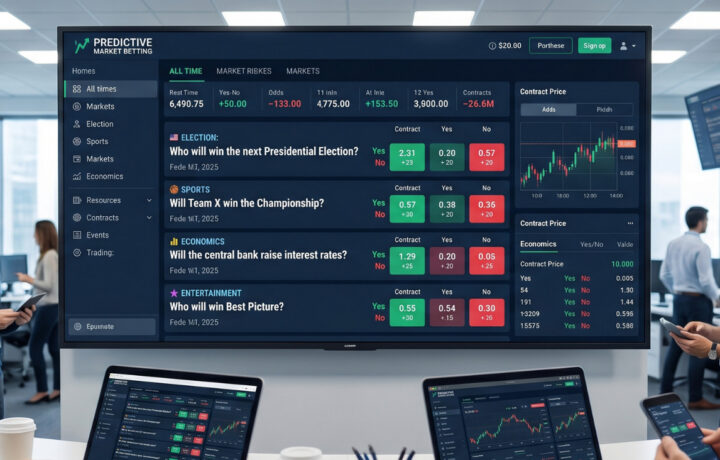
Prediction markets are having a moment—and for security clearance holders, that’s not a good thing.
These platforms allow users to “bet” on real-world outcomes, from elections to geopolitical events. Think of them as financial wagers on the future, where users buy contracts based on whether something will happen or not. But when those events intersect with national security, things get complicated—fast.
Recent headlines revealed that the White House had to warn staff against participating in prediction markets, following suspiciously well-timed bets tied to global conflicts. That alone should be a signal: this isn’t just a theoretical risk.
At the core of the issue is insider information. In traditional markets, using nonpublic information for financial gain is illegal and can lead to serious penalties. Prediction markets exist in a murkier regulatory space, but regulators have made one thing clear—fraud, manipulation, and insider trading rules still apply.
For clearance holders, the bar is even higher.
Even if no law is broken, using privileged access—whether classified or not—to inform a bet can trigger serious concerns under personal conduct guidelines. Clearance adjudications don’t just look at legality; they assess judgment, trustworthiness, and willingness to follow ethical boundaries.
And that’s where prediction markets become especially risky. Many contracts involve geopolitical events, military actions, or policy decisions—the exact areas where cleared professionals may have access to sensitive or early information. That overlap creates a perception problem at best, and a career-ending issue at worst.
The bottom line? If you hold a clearance, prediction markets aren’t worth the risk.
Some bets just aren’t meant to be placed.


