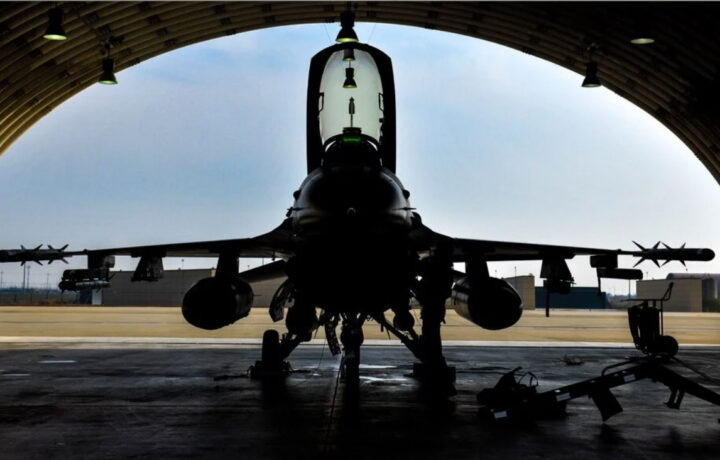
The United States Air Force concluded its “Super Squadron” tests in South Korea earlier this month, the service acknowledged this week. U.S. Air Force F-16 Fighting Falcon aircraft that spent more than a year at Osan Air Base flew back to Kunsan Air Base as part of the “Fighter Squadron Reset” and reintegration into the 8th Fighter Wing.
According to the U.S. Air Force, redeploying the fighters to Kunsan AB will redistribute its combat air power to two major bases, which could also reduce reliance on a single location.
“The reset supports continuous combat readiness and enhances operational flexibility across the Korean Peninsula, strengthening the U.S.-ROK combined defense posture,” Osan Air Base announced.
Super Squadron Powers Deactivated!
In June 2024, the U.S. 7th Air Force in South Korea enhanced its F-16 Fighting Falcon fleet at Osan AB by adding nine aircraft from Kunsan Air Base, creating a “Super Squadron” of 31 multirole fighters. Under the initial Phase I, which began in October 2024, around 150 airmen and nine F-16s were relocated.
Phase II of the reassignment began last October, when 31 additional F-16s, along with around 1,000 U.S. Air Force airmen, were reassigned and deployed from Kunsan AB to Osan AB. The consolidation aimed to evaluate operational efficiency and combat power generation, and whether larger, consolidated fighter units could generate more combat power and operate more efficiently. It allowed the Air Force to collect comprehensive data on large-scale maintenance, manpower, and logistics.
However, creating the super squadrons also placed more of the proverbial eggs in a single basket. That may explain why the evaluation successfully wrapped up ahead of its planned window.
“The transition to a three-squadron structure across Osan and Kunsan AB reinforces the U.S.-ROK Alliance’s commitment to maintaining combat-ready forces and a robust combined defense posture on the Korean Peninsula,” the service explained.
In April, Gen. Kevin Schneider, commander of U.S. Pacific Air Forces, directed the reset of the Seventh Air Force F-16 fleet back to a three-squadron structure.
“The lessons from this test are informing readiness enhancements across the PACAF and USAF F-16 enterprise,” Schneider explained this past spring. “I applaud Seventh Air Force for their creative problem-solving, adaptation, and disciplined execution of this effort. Their work to optimize combat airpower and underlying logistics requirements is informing how our forces better deter aggression while always remaining ready, lethal, and capable in Korea, the Pacific, and beyond.”
Two Bases That Are Within Driving Distance
As reported last year, the two bases are only about 105 miles apart: Kunsan AB is on the southwest coast of South Korea, about 110 miles south of Seoul, while Osan AB is about 40 miles south of the Republic of Korea’s capital.
Moreover, the latter base is also the headquarters of the Republic of Korea Air Force (RoKAF) Operations Command, and it serves as the arrival point for US government-contracted “Patriot Express” flights that transport US service members, as well as their families, from the United States and Japan to South Korea.
The test yielded crucial data on fighter basing in the region.
“The Super Squadron test provided valuable data and critical insights for F-16 operations across the U.S. Air Force. The Airmen involved in this effort demonstrated a culture of adaptability, innovation, and complemented the Agile Combat Employment model by enhancing flexibility within the force,” PACAF explained.
The Multirole F-16
The United States Air Force officially adopted and received its first production General Dynamics F-16 Fighting Falcon in 1978 and became fully operational on October 1, 1980. The aircraft has been steadily updated over the past five decades. Although the U.S. Air Force received its final F-16 in March 2005, Lockheed Martin – which acquired General Dynamics’ aviation business in 1993 – continues to produce the Fighting Falcon for foreign military sales (FMS).
The 36th Fighter Squadron “Fiends” is currently based at Osan, and Kunsan is home to the 35th Fighter Squadron “Pantons” and 80th Fighter Squadron “Juvats.” The single-engine F-16s routinely execute core air and space control missions, including counter-air, strategic attack, air interdiction, and close-air support.
The U.S. Air Force operates approximately 826 F-16s in its fleet.
The service experienced two aerial mishaps this month.
An F-16 assigned to the Texas Air National Guard’s 149th Fighter Wing “Lone Star Gunfighters” crashed during a training flight near Traverse City, MI, while operating out of the Alpena Combat Readiness Training Center. A second F-16, assigned to the 52nd Fighter Wing, crashed during a four-jet routine training flight near Spangdahlem Air Base in western Germany.


