Units of the United States military remain deployed along the U.S. southern border as part of the ongoing efforts to stop the flow of undocumented migrants into the country. However, some U.S. military personnel aren’t just monitoring for illegal crossings by people; they are now monitoring the border for illegal drones.
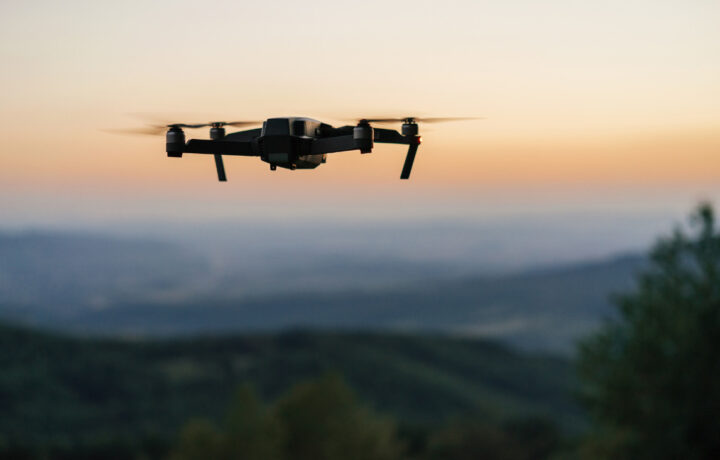
Last month, U.S. Air Force Brig. Gen. Brian Filler, Joint Task Force-Southern Border’s deputy commanding general, warned that transnational criminal cartels were flying commercial drones – rather than sophisticated military aircraft – over the border as part of human-trafficking operations.
“It is a human tragedy what’s going on on our southern border – and the people that are trying to cross are being exploited,” Filler told DefenseScoop, adding, “So, anything we can do to prevent that from happening is good.”
Anti-Drone Training Continues
Given the threat that drones could pose, as has been seen in ongoing conflicts in Ukraine and the Middle East, the Pentagon is taking it seriously. The United States Army is now testing counter-drone systems. During last month’s Falcon Peak 26.2 Exercises, which were conducted by the United States Northern Command (NORTHCOM) at the Yuma Proving Grounds in Arizona, personnel determined how to track and destroy small commercial and hostile drones using radar and optical/infrared sensors, interceptor drones, including Andruil’s Ghost-X, and autonomous gun systems and kinetic/ballistic shotgun systems.
The exercises came a year after NORTHCOM demonstrated the capabilities of a counter-small UAS (C-sUAS) at the Falcon Peak 25.2 at Eglin Test and Training Complex, Fla. During the demonstrations in September 2025, an aggressor UAS flew over the range while the fly-away kit’s mobile sentry detected and tracked it before Anvil, a low-collateral defeat drone, was launched to intercept the UAS, knocking it out of the sky.
Last year’s Falcon Peak 25.2 was described as an “operationally focused event rather than a demonstration. It integrated detection and defeat technologies into a layered defense construct including active and passive radar, radio-frequency analysis, optical and infrared imaging, and acoustic sensors.”
It included defeat options to conduct electronic attacks against control and navigation links, directed-energy techniques, and short-range kinetic interceptors sized for small drones. A key component of the 25.2 event was the Defense Innovation Unit’s Low-Cost Sensing challenge, which selected 10 finalists from 118 applicants to perform live demonstrations.
This year’s Falcon Peak 26.2 was the “first experiment addressing the challenges of countering UAS threats to assets, airspace, and critical infrastructure at the sprawling Southern border with Mexico,” the Missile Defense Agency (MDA) explained, adding the recently concluded drills demonstrated new technologies, expanded focus on low-collateral defeat capabilities, and enhanced collaboration with mission partners. “Industry was provided immediate feedback to accelerate the maturation of innovative capabilities with Department-wide applicability,” the MDA added.
Drones Have Been Downed
Beyond the training, the U.S. military has already downed nearly a dozen drones, believed to be operated by Mexican cartels, with laser technology since being deployed to the border in August in the Rio Grande Valley region.
Gen. Filler told reporters this month that U.S. forces have detected more than 378 drone incursions in the prior 30 days, with the number increasing in recent months.
“We are seeing largely commercial off-the-shelf available drones,” Filler added.
The unmanned aerial systems were linked to surveillance, smuggling, and human trafficking operations.
However, drone activity has declined since the laser systems were deployed in late August. The lasers are also part of a layered approach that includes existing electronic-warfare (EW) systems that can jam aerial platforms, causing them to crash or return to their operators. That has resulted in a 75% drop in drone incursions.
The U.S. Army has been testing the Army Multi-Purpose High Energy Laser (AMP-HEL) system, which integrates AeroVironment’s LOCUST laser weapon technology that provides 20 to 30 kilowatts of power. The laser isn’t powerful enough to literally blast a drone part. However, the concentrated beam of high-energy light can still cause thermal damage, which melts or disables critical components – notably the motor, battery, electronics, sensors, or structural frame.
The Mexican military has also deployed around 165 counter-drone systems along its northern border and could expand further, as it was granted access to C-sUAS systems.
Last month, the Mexican Army announced a joint counter-drone operation in the Tijuana-San Diego area, part of increased cooperation to address the aerial threat on both sides of the border.


