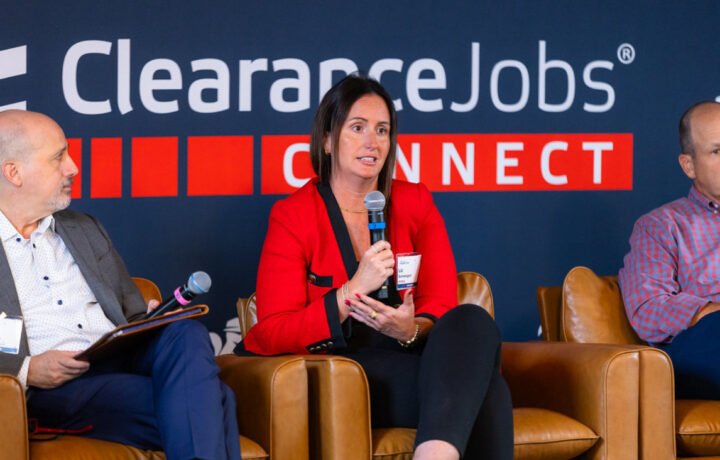
At ClearanceJobs Connect 2026 in Reston, Virginia, a panel of defense and intelligence leaders asked whether the struggles we try to hide can become our greatest professional strengths.
Liz Schweigert, a senior account executive at Nvidia supporting the intelligence community, was diagnosed with breast cancer at 40. She expected a quick recovery. Instead, complications led to eight surgeries in 16 months. Support was strong at first, but as her managers changed, she lost that continuity and had to retell her story to each new leader. Her advice to employers is to trust employees to know what they need, to check in regularly, and to remember that cancer doesn’t end when treatment does.
Schweigert chose to share her journey publicly, and it paid off unexpectedly. After she spoke at a conference women’s luncheon, a senior customer told her on a ride to the airport that she was going through the same diagnosis. That conversation built a relationship that years of business meetings hadn’t.
Peter Kant, CEO of Enabled Intelligence, built his AI data-labeling company around neurodiverse talent from day one. About half his staff identifies as neurodiverse or as having a disability, including deaf analysts working on imagery and visually impaired analysts working on audio. Kant skips the word “accommodation.” Instead he asks employees what they need to do their best work, then measures the results. When employees no longer felt they had to mask, productivity rose across the board. The company hires through a skills-based assessment rather than resumes and keeps 95% of its staff.
Moderator Jon Rosenwasser, the former IC Chief Financial Officer and founder and CEO of Four Corners Analysis, who has a stutter, tied the conversation together. How an organization treats difference reflects its culture, and that culture starts at the top.
For cleared employers, the lesson from Reston is that underestimating people is a costly mistake. As Kant put it, national security competition leaves no room for untapped talent.


