AI is changing how employers find talent and how candidates find jobs. But as technology becomes more embedded in recruiting, one question is becoming increasingly important: How do we maintain trust in the hiring process?
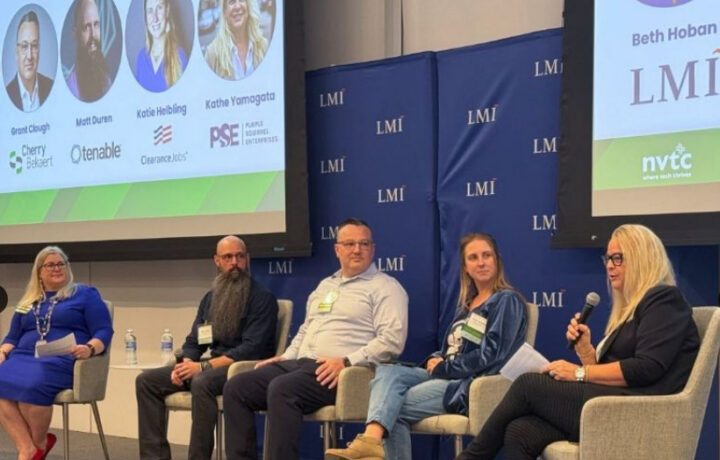
On November 4, ClearanceJobs joined the Northern Virginia Technology Council (NVTC) for Building Hope and Trust in the Hiring Process & the Evolution of AI, a discussion bringing together employers, recruiters, technology leaders, and workforce professionals to explore the challenges and opportunities shaping today’s hiring landscape.
Hosted at LMI Headquarters in McLean, Virginia, the event focused on a growing concern across the recruiting industry: While artificial intelligence is making hiring faster and more efficient, it’s also creating new challenges surrounding transparency, authenticity, and human connection.
From AI-generated resumes and candidate fraud to automated screening tools and increasingly impersonal recruiting experiences, both employers and job seekers are navigating a hiring environment where trust can be difficult to establish.
AI Is Changing Hiring, but Trust Still Matters
Artificial intelligence has introduced significant efficiencies into recruiting. Employers can automate administrative tasks, identify qualified candidates more quickly, and streamline processes that once required hours of manual work. But efficiency doesn’t automatically translate to a better candidate experience.
Job seekers are increasingly concerned about whether actual people review their applications, while employers question the authenticity of resumes, qualifications, and even the candidates appearing in interviews. These challenges have created a trust gap on both sides of the hiring equation.
During the NVTC discussion, ClearanceJobs emphasized the importance of using AI to support hiring decisions without removing the human element that makes recruiting effective. The goal shouldn’t be to remove people from the hiring process. It should be to give recruiters more time to do the things technology can’t: build relationships, understand motivations, and establish trust.
How Employers Can Build Trust in an AI-Driven Hiring Process
One of the central themes of the event was how organizations can rebuild confidence in their recruiting practices while continuing to embrace emerging technologies. For employers, that starts with several important considerations.
1. Be transparent about how AI is being used.
Candidates want to know what happens after they submit an application. Are resumes being screened by AI? Is a recruiter reviewing their qualifications? What factors determine whether they advance? Employers don’t need to disclose every technical detail of their recruiting systems, but communicating how technology fits into the hiring process can help candidates feel more confident that they’re receiving fair consideration.
2. Keep human connection at the center of recruiting.
Automation can help recruiters identify talent, schedule interviews, and manage candidate pipelines. But it cannot fully replace the conversations that help employers understand a candidate’s career goals, motivations, and potential fit. A personalized message, an honest conversation about compensation, or even a timely update can make a significant difference in how candidates perceive an organization.
3. Address candidate fraud without treating every applicant with suspicion.
AI-generated resumes, fabricated qualifications, and increasingly sophisticated candidate impersonation are legitimate concerns for employers. However, organizations must balance verification with a respectful candidate experience. Structured interviews, consistent evaluation criteria, and appropriate identity and qualification verification can help employers protect the integrity of their hiring processes without creating unnecessary barriers for legitimate applicants.
4. Communicate consistently, even when the answer is no.
One of the simplest ways to build trust requires no artificial intelligence at all: communication. Candidates invest time and energy into applying for jobs, preparing for interviews, and navigating hiring requirements. When employers fail to provide updates or leave applicants wondering where they stand, confidence in the process erodes. Setting clear expectations, communicating realistic timelines, and closing the loop with candidates can go a long way toward improving the hiring experience.
Why Trust Is Especially Important in Cleared Recruiting
For the national security workforce, trust has always been foundational. Employers recruiting security-cleared professionals must navigate additional complexities, including clearance verification, eligibility requirements, specialized qualifications, and a limited talent pool.
Candidates may also be hesitant to share sensitive career information or engage with unfamiliar recruiters, particularly when they cannot easily determine whether an opportunity or outreach message is legitimate. As AI-generated content and automated outreach become more common, establishing credibility becomes even more important.
For cleared recruiters, that means prioritizing authentic communication, understanding the security clearance process, and demonstrating that they genuinely understand the roles they’re trying to fill. It also means recognizing that cleared professionals have choices. A recruiting experience built on transparency, professionalism, and mutual respect can become a competitive advantage for employers seeking difficult-to-find talent.
Finding the Balance Between Innovation and Human Connection
One of the most valuable aspects of the NVTC event was the opportunity to bring different perspectives into the same room. Employers are looking for ways to improve efficiency. Recruiters are managing growing workloads and evolving technologies. Candidates want opportunities to demonstrate their skills and feel confident they’re being evaluated fairly.
These priorities aren’t mutually exclusive.
AI can help reduce administrative burdens, improve sourcing, and make recruiting processes more manageable. But organizations must be intentional about where they introduce automation and where human judgment remains essential. The future of hiring doesn’t have to be a choice between technology and people. It’s about understanding how the two can work together to create a process that’s more efficient, more transparent, and ultimately more trustworthy.
As artificial intelligence continues to evolve, the recruiting industry will undoubtedly face new questions about authenticity, fairness, and the candidate experience. But one thing remains unchanged: Hiring is ultimately about people. At ClearanceJobs, we see firsthand how important meaningful relationships are to connecting national security employers with the professionals who support their missions.
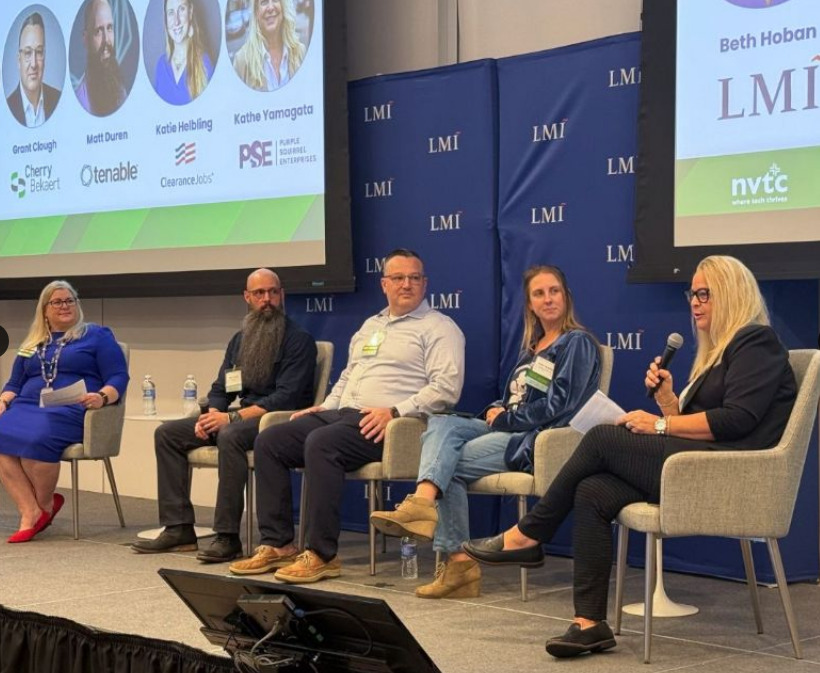
We’re grateful to the Northern Virginia Technology Council for bringing together an engaged group of professionals willing to ask difficult questions, share perspectives, and explore practical solutions. The level of audience engagement was also a reminder that, even in an increasingly automated world, human connection still matters.
Technology may change how we recruit, but trust will always determine how successfully we connect.


