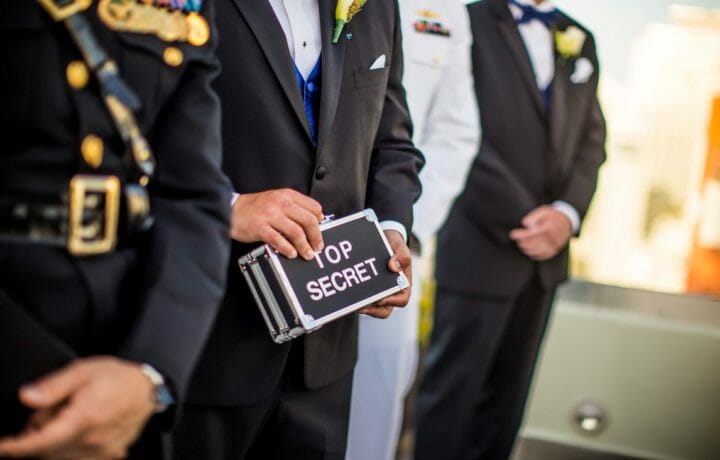
One of the first briefings an individual receives after being informed that they have been granted a security clearance, is the counterintelligence brief. Included in the counterintelligence brief will be multiple references to foreign and hostile intelligence services and their interest in individuals who have been granted a security clearance and enjoy the trust of the U.S. government. This is reinforced during the foreign travel security brief which the cleared individual will receive from their Facility Security Officer.
Both the Federal Bureau of Investigation and the Defense Security Services have issued counterintelligence guidance (see below) to prep the foreign traveler, and it should be a mainstay of the pre-travel preparation by any traveler.
Five Travel Tips:
Tip #1: Travel with “designated” travel devices. Ensure the device(s) which are being used are “designated” travel devices, that is devices which are sanitized prior to travel, loaded only with data required for the trip. It is no doubt difficult for the traveling executive to want access to every email and all their electronic files when on the road, as productivity may drop. Security concerns, however, make it prudent to only travel with information specific to the trip.
Tip #2: Maintain 24/7 possession of these devices. As detailed in the counterintelligence pamphlets, foreign intelligence services delight in being allowed physical access to cleared U.S. personnel’s electronic devices. Maintaining 24/7 possession, increases the level of difficulty considerably. Try not to allow convenience to trump security, and use the hotel room safe to secure the electronic devices. While the safe may slow down the casual thief, they are accessible by the aforementioned foreign intelligence service in seconds, using the same technology the hotel will use when you call and advise you have forgotten the 4-6 digit pin and your passport is inside.
Tip #3: Register your itinerary with the U.S. Department of State. The Department of State’s Smart Traveler Enrollment Program is designed specifically to alert the U.S. Embassy or Consulate where one is traveling. Enrollment is free, and the traveler can update itinerary via the website. In the event of a natural catastrophe or civil disturbance, the Embassy/Consulate will have your contact data and if warnings or alerts are provided to U.S. persons in the consular zone, the traveler will be included.
Tip #4: Have no expectation of privacy. While privacy is fleeting in many locales due to population density and cultural norms, the privacy discussion here is more along the lines of privacy for sensitive conversations or meetings. Hotel rooms, restaurants, elevators, cafes, lobby’s etc., should all be considered hostile environments where no sensitive conversations should take place.
Tip #5: Avoid illegal activities. Avoid any activities which could be construed as provocative by the local security services. From time to time, travelers in foreign locales lose their inhibitions, avoid such. Nothing makes the foreign intelligence officer’s job easier than a traveler who chooses to place themselves in a compromising position. This could take the form of taking an envelope from a stranger; engaging in black-market currency exchange; purchase of illegal substances; etc.
Additional reading:
Defense Security Service: Foreign travel Vulnerability
Federal Bureau of Investigation: Safety and Security for the Business Professional Traveling abroad


