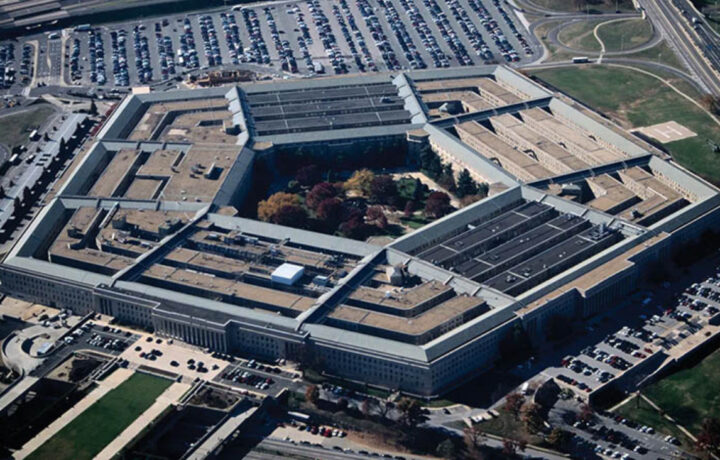
A 2023 report from the Government Accountability Office (GAO) warned that many U.S. military barracks were in poor condition and that the substandard conditions could negatively impact troop morale, health, and even readiness. The study cited several issues, including outdated infrastructure, poor maintenance, overcrowding, and even serious safety risks such as pervasive mold, bed bugs, and other pest infestations. Service members had reported problems such as broken air conditioning, sewage backups, and non-functional hot water systems.
There were also inoperable fire systems, broken windows, and other safety hazards.
The issues were made worse because maintenance requests often take weeks, and at times months, to be addressed. The U.S. Army has sought to address the issue.
Barton Barracks Rehab Underway
In September, the United States Army announced that it had officially launched a $330 million modernization of Barton Barracks in Germany. That included demolishing outdated facilities and constructing new “state-of-the-art infrastructure” to support two newly activated units: the 7th Engineer Brigade Headquarters and the 1st Battalion, 57th Air Defense Artillery Regiment (1-57 ADAR).
“The modernization plans for Barton Barracks include several major projects,” the Army explained. It includes two four-story buildings, which will be renovated at a cost of $13.7 million to house the 1-57 ADAR headquarters and administrative offices. The renovations are set to begin this month.
In addition, construction of two new Unaccompanied Personnel Housing (UPH) barracks with a combined capacity of 260 Soldiers is on track to begin in summer 2026.
“Each barracks will cost $100 million and include parking areas for unit personnel,” the Army added.
“The new infrastructure will ensure our unit has the facilities needed to maintain operational effectiveness and demonstrate the U.S. Army’s enduring commitment to Europe and NATO,” explained Lt. Col. Andre D. Ruff, commander of the 1-57 ADAR.
Barracks Task Force
Last week, Secretary Pete Hegseth announced that the Pentagon would invest $400 million in “immediate work” to address aging barracks and other troop housing.
“To provide every warfighter a room that is clean, safe, and comfortable. Locks that lock, security cameras that work, furniture and mattresses that aren’t older than the service members sleeping on them, and no mold. That doesn’t take a plan, that takes action,” Hegseth said in a video shared on social media, offering the latest update to the Barracks Task Force that the Department of Defense set up in October.
Hegseth had previously suggested that the One Big Beautiful Bill Act, which President Donald Trump signed into law in early July, gave the DoD a “down payment” to address the issue. According to a report from The Military Times, the bill provided $230 million for the Marine Corps Barracks 2030 initiative, as well as $425 million for enlisted boot camp barracks and other related facilities, and another $1 billion for Army, Navy, Air Force, and Space Force “sustainment, restoration, and modernization of military unaccompanied housing.”
Progress Being Made, but Much More to Do
The task force has already made much progress, Hegseth stated—money directed towards the effort paid for new furnishings and mattresses at 81 barracks. In addition, it enabled the installation of new security systems in 13 barracks. Together, the upgrades have impacted more than 10,000 military service members.
Progress will continue, but could still be going so, simply because the problem was ignored for a long time.
There was also scrutiny earlier this year, after it was reported that the DoD had redirected more than $1 billion from barracks and facility maintenance to support border security operations. This has involved reallocating funds from the Army’s Facilities Sustainment, Restoration, and Modernization budget to cover costs for military support at the southern border, which includes aviation assets and deployed ground forces.
As previously reported, the reallocation from a “historically underfunded account”—which supports routine maintenance and more significant mission upgrades—was seen to impact day-to-day maintenance.
Another government watchdog, the Congressional Budget Office (CBO), estimated that the U.S. Army has a backlog of $20 billion worth of repairs and renovations to its facilities. The average age of a service building is 47 years, and many junior enlisted troops live in housing decades old.


