Artificial intelligence (AI) is being developed to mimic human vision, utilizing a combination of computer vision, deep learning, and annotated training data. It can further recognize patterns and then classify them by shape, color, and texture. Such technology is critical for autonomous vehicles to detect surrounding objects for safe driving, and can enhance efficiency in manufacturing by monitoring production lines, while in retail, it can track foot traffic.
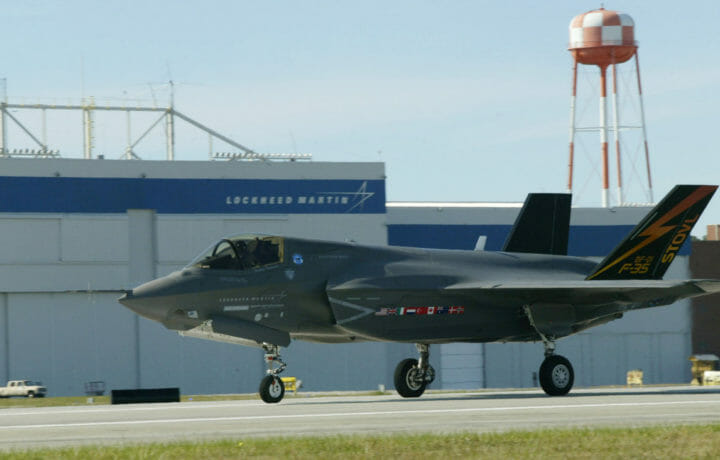
This ability to recognize objects is also being incorporated into the Lockheed Martin F-35 Lightning II, a fifth-generation stealth fighter already considered one of the most advanced combat aircraft in service worldwide today.
The aerospace and defense giant announced this week that it has recently conducted a flight test at Nellis Air Force Base (AFB), Nevada, of an AI-enhanced Combat Identification (Combat ID) system with a Lightning II. The Combat ID was integrated into the F-35’s information fusion system. Dubbed “Project Overwatch,” it marked the “first time a tactical AI model” was employed in flight to generate an independent Combat ID on the pilot’s display.”
The effort builds on work Lockheed Martin conducted with the U.S. Navy in the Red Sea last year, during which real-time software updates enabled the AEGIS combat system to counter evolving drone and missile threats.
With the F-35, the AI/machine learning was able to resolve “ID ambiguities among emitters, improving situational awareness and reducing pilot decision-making latency.” Lockheed Martin added that engineers used an automated tool to label new emitters and retrain the AI model to learn the new emitter class within minutes. The data was then used to update the model for the next flight, “all in the same mission planning cycle.”
AI as The F-35’s Co-Pilot
The AI system could help pilots identify threats and make calculated decisions based on data it can synthesize in real time. This technology is still very much in the testing stage. Still, Lockheed Martin will continue to improve capabilities and expand the AI model’s training, enhancing its reliability and accuracy.
“This is a demonstration of 6th Gen technology brought to a 5th Gen platform,” explained Jake Wertz, vice president of F‑35 Combat Systems at Lockheed Martin Aeronautics.
“Equally important is our ability to re‑program the AI model on the ground and have those updates available for the next sortie—an essential step toward maintaining a tactical edge in a rapidly evolving threat environment,” added Wertz. “ These capabilities embody Lockheed Martin’s 21st-century strategy, which advances every product line by integrating next-generation performance, continual software modernization, and AI‑driven decision making to keep our customers ahead of emerging challenges.”
Improving the F-35 Specialized Helmet
Lockheed Martin didn’t clarify exactly where the data would be displayed, but it should be noted that the F-35 is already more advanced than previous aircraft.
The F-35 pilot display is integrated directly into the pilot’s custom-fitted helmet, known as the Helmet Mounted Display System (HMDS). Unlike traditional glass heads-up displays (HUDs), the flight data, targeting information, and night vision are projected onto the visor, allowing the pilot to see critical information in any direction.
In addition, a 20×8-inch panoramic touchscreen is also in the cockpit of the Lightning II.
As reported back in 2021, the specialized HMDS costs upwards of $400,000 and requires two days of special fittings. The carbon fiber helmet’s displays can deliver crucial data to the pilot, but now AI will help synthesize some of that data, notably data that could pose a threat to the aircraft.


