When people think about hubs for cleared work, places like Northern Virginia, San Diego, or Huntsville usually top the list. Oklahoma City rarely makes that first cut. But spend a little time looking under the surface, and it becomes clear there’s more happening here than most people realize.
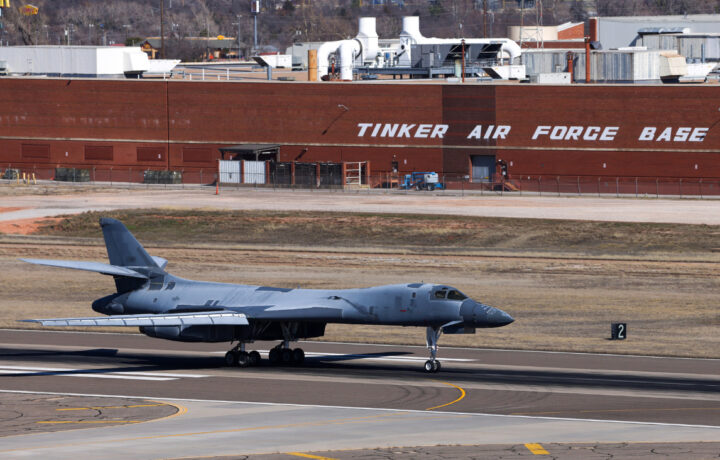
Oklahoma City has been supporting national security missions for decades, anchored by Tinker Air Force Base, one of the largest military maintenance depots in the world. Around it, a steady ecosystem of defense contractors, aviation companies, and federal agencies has taken shape. It’s not flashy, and it’s not always clearance-heavy across the board, but it is consistent, mission-driven work.
To better understand what that looks like on the ground today, I spoke with Greg Treacy, Vice President of the Oklahoma City site for Pratt & Whitney. His perspective reflects both the long history of aerospace work in the region and where it’s headed next.
Sustaining the Mission, Engine by Engine
At the center of Oklahoma City’s national security footprint is sustainment work. Not the headlines, not the shiny new programs, but the behind-the-scenes effort that keeps aircraft operational.
At Pratt & Whitney’s Oklahoma City campus and its partnership with Tinker, the work spans maintenance, overhaul, engineering, and material readiness for some of the Air Force’s most critical engine programs, including the F135 and F119. The site is the only F119 heavy maintenance depot in the world and one of just three for the F117.
That scale is backed by real investment. The company opened a new 845,000-square-foot facility in 2024, representing a $255 million investment and supporting more than 500 employees on site.
But even with that scale, the work still feels hands-on.
Treacy described it simply as teams working side by side with the Air Force to disassemble, inspect, repair, and rebuild engines that directly support missions around the world. It’s technical, but it’s also tangible.
And that visibility matters.
“I’m looking out my window and I see a couple of airplanes taking off from the base,” Treacy said. “It’s so easy to understand the mission when you can see the product of what you do every day.”
A Workforce That Spans Disciplines
One of the more interesting takeaways from the conversation was how broad the workforce needs actually are.
Engineering roles are a core focus, especially as the company builds a long-term pipeline from early-career hires to experienced professionals. But that’s just one part of the picture.
“We’re looking for all kinds of skill sets,” Treacy said. “Supply chain, materials, quality, finance, environmental health and safety, security, people who run machines… really any kind of manufacturing function.”
It’s a reminder that national security work is rarely confined to one lane. It’s a system, and every part of it has to function.
There’s also a strong military connection. Roughly a third of the workforce has some form of military experience, whether active duty, reserves, or veteran status. That influence shows up not just in resumes, but in how teams operate and solve problems together.
The Clearance Factor
Compared to larger hubs, Oklahoma City doesn’t have the same volume of cleared roles. But that doesn’t mean clearances aren’t relevant.
At Pratt & Whitney’s Oklahoma City site, most roles do not require a clearance today, but there are specific, high-impact positions that do. And that footprint is expected to grow.
The company’s new facility includes dedicated areas designed for classified work, positioning the site for future programs that will require cleared talent.
That said, the challenge around clearances looks familiar.
“The time to get a clearance… it can take some time,” Treacy noted. “Sometimes people will move on if it takes too long.”
For candidates who already hold a clearance, the advice is straightforward and practical. Keep it active.
“It’s such a great advantage for a company to hire somebody who has a clearance, particularly an active clearance,” he said.
Why Oklahoma City Is Getting a Second Look
Beyond the work itself, Oklahoma City is benefiting from a broader shift in how people think about where they want to live and work.
Treacy pointed to the state’s push to grow aerospace as a primary industry, alongside oil and gas. That effort is showing up in workforce development, STEM outreach, and partnerships with schools across the state.
The broader ecosystem reinforces that momentum. Federal Aviation Administration has a major presence in Oklahoma City, and companies like Boeing and Northrop Grumman support related work in the region. In Tulsa, American Airlines operates one of the largest commercial maintenance bases in the world.
At the same time, the lifestyle factors are hard to ignore. Lower cost of living, steady growth, and a city that’s evolving faster than many expect.
“It’s an incredible time to be in Oklahoma,” Treacy said, pointing to both the growth in aerospace and the overall momentum of the city.
A Different Kind of Career Conversation
One theme that kept coming up in the conversation was simple but easy to overlook. Know your “why.”
In a market like Oklahoma City, where the work is closely tied to real-world mission outcomes, that question carries more weight.
When people leave jobs, Treacy said, it’s often not about compensation or location. It’s about disconnect.
“They didn’t have a passion for what they were doing… or didn’t understand why they were doing it,” he said.
That’s where this kind of work stands out. When you can see the mission, the systems, and the impact, it changes how you engage with your job.
For cleared professionals, Oklahoma City may not be the first place they consider. The number of clearance-required roles is smaller, and the market looks different from larger hubs.
But that’s also part of the opportunity.
It’s a place where the mission is visible, the work is steady, and the path forward doesn’t always follow the same playbook as the bigger markets. And as the national security workforce continues to shift, those kinds of markets are becoming harder to ignore.


