The Detroit Tigers baseball franchise is experiencing a tough 2026 season, but a different kind of tiger roared into action earlier this month at the Detroit Arsenal. The headquarters of the United States Army Tank-automotive and Armaments Command (TACOM) in Warren, Michigan, hosted the Total InteGrated Engine Revitalization (TIGER) Hackathon.
The collaborative event was hosted jointly by the Integrated Logistics Support Center (ILSC), Project Manager (PM) Abrams, the Ground Vehicle Systems Center (GVSC), Army Contracting Command-Detroit Arsenal (ACC-DTA), and the original equipment manufacturer, Honeywell Aerospace. It drew more than 40 vendors and included 34 scheduled one-on-one sessions between industry partners and government subject matter experts.
Start Your Engines
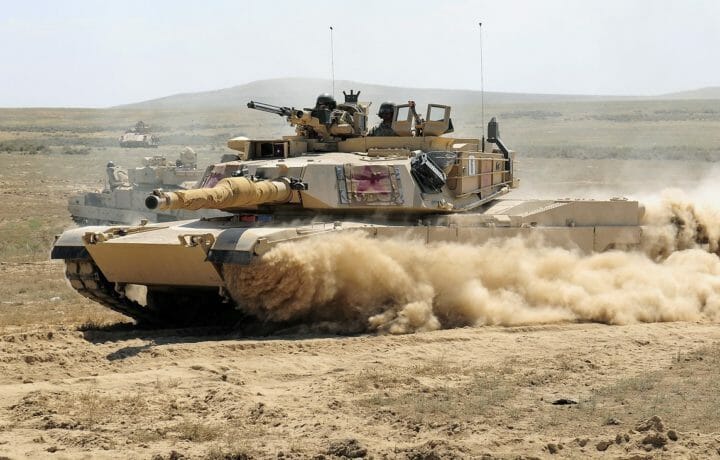
The primary mission of the U.S. Army’s TIGER hackathon was to identify innovative solutions that could aid in resolving critical sourcing and manufacturing bottlenecks with the M1 Abrams’ AGT1500 gas turbine engine.
The issue has been driven by an increase in sole-source subcontractors and business models that were optimized for low-volume production.
According to the U.S. Army, up to 166 critical AGT1500 subcomponents rely on single-source suppliers, which in turn prioritize large-batch commercial manufacturing rather than the small and often urgent orders required by the service. The hackathon was meant to address those issues and increase the operational readiness of the Abrams fleet.
According to the U.S. Army, the briefings and collaborative discussions centered around three core objectives:
- Traditional Second Source, which sought to establish reliable secondary manufacturing and supply lines for critical components using traditional production methods.
- Advanced Manufacturing, which called for the leveraging of cutting-edge manufacturing technologies to rapidly produce components from the 166 Critical and Single Source List.
- Material Provision, which sought to secure critical raw materials, forgings, castings, and structural elements to accelerate the overall production cycle.
During the event, two AGT1500 engines and vital components were displayed, allowing vendors to conduct hands-on inspections and to engage directly with subject matter experts from the hosts, including ILSC, PM Abrams, and GVSC.
“Following morning briefings—which included a session on supplier requirements led by Honeywell Aerospace —the afternoon featured intensive, one-on-one matchmaking and strategy meetings with U.S. Government representatives,” the service explained and further noted that the successful turnout of the event marked a significant step forward for the U.S. Army’s ability to secure a supply chain for the M1 Abrams engine.
The government will next update its current Area of Interest (AoI) to include technical data that can be shared with industry. Then the government will release a further AoI under the Ground Maneuver Commercial Solutions Opening to request a White Paper/Solution Brief from industry detailing what core objective(s) and critical component(s). That will gain interest from the supply chain to find innovative solutions to help resolve the critical sourcing and manufacturing bottleneck.
About the AGT1500
Originally developed by Avco-Lycoming, now Honeywell, the AGT1500 is a 1,500-shaft-horsepower gas turbine engine that serves as the primary powerplant for the U.S. Army’s M1 Abrams series of main battle tanks (MBTs).
The engine weighs about 2,500 pounds and is able to provide rapid acceleration, multi-fuel capabilities, and extremely reliable cold-weather starting. The AGT1500 provides 2,750 lb-ft of torque, enabling the 60+ ton Abrams to accelerate from 0 to 20 mph in just six seconds, and maintain a top speed in excess of 40mph.
Compared to traditional diesel tank engines, it produces virtually no smoke and operates with a noticeably lower level of noise and vibration. It can also run on standard diesel, multiple jet fuels including JP-4, JP-5, JP-8, unleaded gasoline, kerosene, and even marine diesel in emergencies. Experts have said if it burns, it can probably power the AGT1500, and there are even reports that it would run on Bacardi 151 rum!
Vehicle Tradeoffs
There are tradeoffs, and even with quality fuel, it is estimated to use 1.5 to 3 gallons per mile.
It is also a complex powerplant, relying on jet engine technology. It has fewer moving parts than a piston engine, but it is still highly intricate in execution and requires specialized depot-level maintenance. The U.S. Army has addressed this issue by employing a “swap-and-go” system, in which an engine that fails is pulled and replaced with a new engine, with the old one sent back to specialized depots for deep maintenance.
The United States M1 Abrams MBT first entered service in 1980. At the time, it was considered a revolutionary leap forward in tank development. The platform has been steadily updated and improved, and is set to remain in service into the 2030s.


