Tennessee is famous for its rich musical heritage, including being the home to Elvis Presley’s Graceland estate and Dolly Parton’s Dollywood family theme park. The Great Smoky Mountains are the most-visited national park in the United States, and the Volunteer State is known for its unique Southern food.
Then there is its nuclear history, rooted in the Manhattan Project, anchored by the Oak Ridge National Laboratory, and expanded through the Tennessee Valley Authority (TVA). Last month, Tennessee Governor Bill Lee announced that the U.S. Department of Energy (DOE) named Tennessee as a finalist to host a Nuclear Lifecycle Innovation Campus.
“As the global epicenter of nuclear energy, Tennessee is honored to be selected as a finalist to host a Nuclear Lifecycle Innovation Campus,” said Gov. Bill Lee. “Our state answered the call during the Manhattan Project and helped shape the course of history, and Tennessee stands ready once again to advance the safe, reliable energy solutions our nation depends on. I thank President Trump and Secretary Wright for their leadership as we strengthen America’s energy dominance and create new opportunities for Tennesseans.”
The DOE received 28 applications from 26 states, and the four other competitors selected include Louisiana, Oklahoma, Utah, and Idaho. Tennessee officials have cited that it already offers among the most comprehensive nuclear lifecycle programs in the country.
Supporting a Full Nuclear Lifecycle
The DOE proposal in January invited states to “express interest” in hosting the NLICs and to participate in the effort to modernize and strengthen the nation’s position in nuclear energy.
The program calls for a campus that could support activities across the full nuclear fuel lifecycle, the DOE explained, from fuel fabrication, enrichment, the reprocessing of spent nuclear fuel, and then the disposition of waste.
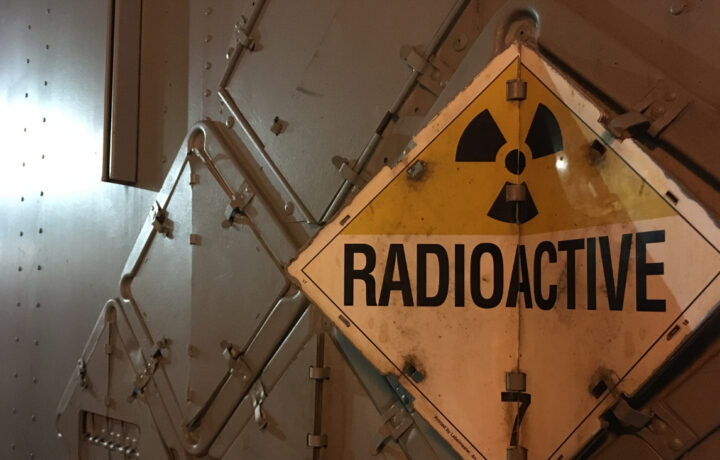
It would require a storage site that could contain 95,000 metric tons of spent nuclear fuel and radioactive waste, as plans for a permanent underground facility at Nevada’s Yucca Mountain remain stalled.
University of Tennessee Knoxville Effort
Tennessee’s selection may be bolstered by the University of Tennessee’s nuclear knowledge and workforce development pathways, and its proximity to the Oak Ridge facility. The school’s nuclear energy department is stated to rank number two nationally among public institutions with facility expertise and student outcomes.
It is located just miles away from a nuclear corridor that consists of more than 230 nuclear lifecycle companies.
“This announcement should further the opportunities for our students and faculty to contribute to the nuclear epicenter,” explained UT Department of Nuclear Engineering TVA Department Chair Brian Wirth. “In particular, we will educate the future nuclear workforce and lead research required to innovate solutions to nuclear fuel reprocessing. This will contribute to optimizing nuclear waste disposal that will lead the nation and the world.”
Highlights from Tennessee’s Proposal
The Volunteer State provided several reasons why it should be selected to host the Nuclear Lifecycle Innovation Campus. The proposal offered the following highlights:
- A Complete Nuclear Ecosystem: Tennessee offers the most comprehensive nuclear ecosystem in the U.S., spanning nearly the full nuclear lifecycle. This existing infrastructure enables Tennessee to meet DOE’s preference for rapid, large-scale deployment.
- Oak Ridge as the Nation’s Nuclear Epicenter: Anchored by Oak Ridge National Laboratory (ORNL) and the Y-12 National Security Complex, Tennessee has led U.S. nuclear innovation since the Manhattan Project and continues to drive advancements in AI, quantum computing, isotope production, and next-generation nuclear technologies.
- Leadership in Next-Generation Nuclear Deployment: The Tennessee Valley Authority (TVA) has been selected for a $400 million DOE award to advance the Nation’s first small modular reactor at the Clinch River Site, positioning Tennessee at the forefront of new nuclear energy development.
- Significant Private-Sector Investment: Tennessee continues to attract major private investment, including up to $40 billion in small modular reactor manufacturing from GE Vernova Hitachi, reinforcing its leadership in nuclear innovation and production.
- Robust Industry and Workforce Pipeline: More than 230 nuclear lifecycle companies operate in the Oak Ridge–Knoxville corridor, supported by strong state partnerships, workforce training programs, and targeted supply chain investments that are creating high-quality jobs.
- Proven Regulatory Environment: As a Nuclear Regulatory Commission (NRC) Agreement State with more than 60 years of experience, Tennessee offers a predictable regulatory framework, complemented by the Nation’s first fusion-energy regulatory structure and participation in the FAST-41 program to streamline permitting.
- Strong Legislative Support: The Tennessee General Assembly has demonstrated clear support through Senate Joint Resolution 887, recognizing the economic, strategic, and national security benefits of hosting the Innovation Campus.
Tennessee State Senator Opposes Hosting NLIC Site
Even as Governor Lee has stated the potential economic windfall that the NLIC could bring to Tennessee, State Senator Heidi Campbell (D-Nashville) has expressed opposition, warning that the same geography that makes the region a tourist draw would present issues for the safe management of nuclear waste.
Campbell questioned which geologic formations were being evaluated, and addressed the fact that the materials could be safely transported from satellite sites via road, rail, and barge on the Clinch River.
“What communities along those transportation corridors have been notified that nuclear material may be regularly transported through their towns,” Campbell questioned, further noting that there had been engagement with industry partners, mayors, and universities, but none with the general public, community health organizations or environmental advocacy groups.
“Governor Lee, Tennessee may well have a role to play in the nation’s nuclear energy future. But the decision to make Tennessee the permanent home of the nation’s nuclear waste – including used nuclear fuel from reactors across the country and potentially from other nations – is not yours alone to make,” Campbell wrote. “It belongs to the people of this state.”


