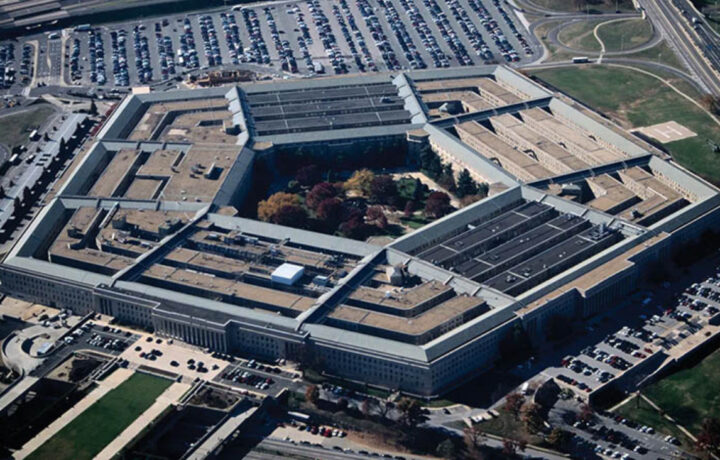
On August 17, the Department of War issued formal notifications to 30 U.S. academic institutions requiring immediate reviews of their academic, financial, and research collaborations with foreign entities of concern. The notifications reference two categories: entities identified under Section 1286 of the FY19 National Defense Authorization Act, and organizations associated with rebranded Confucius Institutes.
The Section 1286 list, updated in July 2026, identifies 130 academic and research institutions located in China, Russia, and Iran. China accounts for the large majority of entries on the list and is the sole focus of the Confucius Institutes language. Russia and Iran appear on the same statutory list and therefore fall within the required reviews, though their footprint in active U.S. university relationships is substantially smaller.
Foreign influence is not new
Ongoing risk assessments within the national security rubric are prudent. This is not a new phenomenon. As noted in the May 2020 ClearanceJobs analysis, “China’s 1000 Talents Program Continues to Harvest U.S. Knowledge,” participation in Chinese talent programs is not illegal when properly disclosed. The persistent problem has been concealment, dual appointments, and the conversion of open academic relationships into channels for knowledge transfer that the U.S. side did not fully control. China’s continued efforts to purloin the knowledge are detailed in the February 2026 update of “Bounty-as-a-Service: How China Is Buying Human Expertise.” While the Thousand Talents branding receded, successor programs continued to target individuals with specialized human expertise for recruitment. Institutional relationships that enable those channels also adapted and, in many cases, persisted after official Chinese Confucius Institute closures.
A Precautionary Step
This precautionary directive helps universities identify any remaining gaps in security protocols. A reading of the directive does not assert that the notified institutions are actively engaged in wrongdoing. Sarah Spreitzer, vice president at the American Council on Education, which represents college and university presidents, made that distinction clear: “We don’t appreciate the implication that we are not good partners on research security, given that we helped create this list, and given that we’ve always partnered with the federal government when there has been national security concerns.” To suggest the schools are actively engaged in wrongdoing would be premature.
Dr. Joseph Jewell, Assistant Secretary of War for Science and Technology, noted, “Universities are critical partners in executing a wide range of Department of War research programs, and the Department must therefore ensure that our research investments are well protected from foreign exploitation.”
While the Under Secretary of War for Research and Engineering, Emil Michael, took a more aggressive and presumptive optic, which Spreitzer’s caution speaks to directly, “The Department of War has zero tolerance for academic partnerships that compromise our national security. Institutions that receive funding from American taxpayers must uphold the highest standards of research security, and these mandated audits will ensure accountability across the board.”
He is joined by the House Select Committee on the Chinese Communist Party Chairman John Moolenaar, who on August 18 projected: “Universities that repeatedly fail to follow basic research security guidelines and ignore problematic foreign relationships should face real consequences for their abuse of American taxpayer dollars. Research partnerships and collaboration with Chinese entities linked to the CCP and the PLA present undeniable national security risks.”
What Universities Must Do
The 30 institutions must complete the audits, assess any exposure of sensitive or export-controlled research, and implement mitigation plans, including termination of problematic partnerships where necessary. Findings and actions are due to the Department by August 31. Non-compliance places future federal research funding eligibility at risk.
For universities of this scale, the underlying relationship data largely already resides in existing research-security, export-control, and international-agreements systems. The requirement is formal documentation, risk assessment against the current Section 1286 criteria and the successor-organization standard, and action under a short deadline.
Caution and precision required
Not every Chinese researcher, student, or cultural exchange constitutes an intelligence or influence operation. Legitimate scientific collaboration exists. The operational requirement is precise: identify and close any remaining gaps involving non-transparent dual affiliations, military-civil fusion linkages, or successor entities that replicate earlier access models. China dominates the relationships that fall under the Department of War’s stated criteria. Russia and Iran, while present on the Section 1286 list, represent a far smaller share. The Secretary’s directive forces the universities to conduct a self-analysis and confirm that those gaps have been closed.
Note: According to DefenseScoop, the 30 universities are believed to be the following: Georgetown University; Massachusetts Institute of Technology; University of California, Berkeley; University of California, San Diego; University of Texas at Austin; Emory University; Harvard University; Oklahoma State University; Penn State University; University of California, Los Angeles; University of Cincinnati; University of Minnesota; University of North Carolina, Chapel Hill; University of South Carolina; University of Southern California; Virginia Polytechnic Institute and State University; Worcester Polytechnic Institute; Bryant University; Cornell University; Drake University; Duke University; Illinois Institute of Technology; Johns Hopkins University; New York University; Northeastern State University (Tahlequah, Oklahoma); Portland State University; Southern Illinois University, Carbondale; Stony Brook University; University of Delaware; and University of Illinois, Urbana-Champaign.


