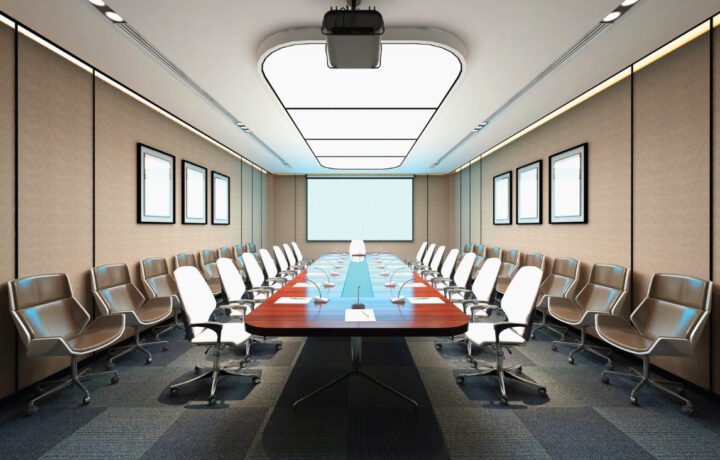
The nation’s large defense contractors generally deploy extensive physical infrastructure designed specifically for classified work, even if maintaining and expanding it remains an ongoing operational challenge. Large prime contractors are all but required to operate numerous permanent Sensitive Compartmented Information Facilities (SCIFs), which can feature acoustic baffling, electronic surveillance countermeasures, reinforced physical barriers, and strict entry controls.
As previously reported, “Building a SCIF is costly. Experts note that basic facility security adds a minimum of $50 per square foot to the cost. High-end facilities can run $1,000 or more per square foot over the normal costs of construction.”
Moreover, federal agencies require a verified secure environment before awarding Top Secret or Sensitive Compartmented Information (SCI) work. That could put smaller and enterprise contractors at a disadvantage and create a steep “Catch-22”: they can’t win classified work without a SCIF, but often can’t justify the multi-million-dollar cost of building one without first securing the work.
Last week, the Department of War announced a new initiative that could expand access to smaller firms. The Pentagon is rolling out the “Secure Space Network,” which will deploy approximately 50 mobile SCIFs to give suppliers and other supply-chain firms access to the contracting process.
“This effort will enable more defense suppliers to participate in classified development, collaboration, and production by broadening regional access to accredited secure workspaces,” the Pentagon explained.
It could also increase market competition and in turn speed up the delivery of critical defense capabilities by expanding the pool of companies able to transition from unclassified work into classified work.
Rapidly Deployable Secure Facilities
The Secure Space Network is being led by the Office of the Under Secretary of War for Acquisition and Sustainment’s Office of Industrial Base Growth, and the Secure Space Network. The effort will provide access to rapidly deployable secure facilities that can be positioned at military installations, at industry-focused sites including APEX Accelerators, and other mission-relevant locations.
The mobile facilities will address what has long been a persistent barrier for companies that have sought to support national defense. The Secure Space Network will make accredited secure environments available for companies in more locations across the country, which will in turn expand the pool of companies available to collaborate directly with government teams, but also compete for classified defense work.
“We must make it easier for capable companies to contribute at every level of the mission. Industry has identified access to classified environments as a major barrier, and the Secure Space Network directly addresses that challenge by opening the door to classified work for more companies,” said James R. Mismash, Deputy Assistant Secretary of War for Industrial Base Growth and Director of the Office of Small Business Programs. “With strong partnership across the agency and support from Congress, this effort will strengthen our supplier base and help deliver the capabilities our warfighters need faster and at greater scale.”
Although the Secure Space Network program will provide the physical space, participating companies will still be required to independently obtain the necessary facility security clearances (FCL), and they must meet government compliance standards to handle classified information. The network will in turn provide the physical and technical workspace.
Scalable and Mobile
The mobile secure facilities promise to be both scalable and rapidly deployable, and still provide enduring secure collaboration capacity.
“Together, these capabilities will drastically expand where government and authorized industry partners can conduct classified work,” the department added, suggesting that it will result in a larger and more capable supplier base. It will also offer opportunities for enterprises to move from unclassified engagement into classified development and production, which will increase competition across the Defense Industrial Base (DIB).
According to the Pentagon, initial production will also provide “repeatable capability,” which could expand secure infrastructure as both national and industrial requirements control. By making it mobile, it will provide surge-capable pathways across the DIB.
“Rather than relying solely on traditional facility construction,” the Pentagon added, “the approach gives the Department greater flexibility to position secure capabilities closer to emerging mission requirements, suppliers and technology development activities.”
A timeline has yet to be announced, but the Secure Space Program is now in its initial phase.


