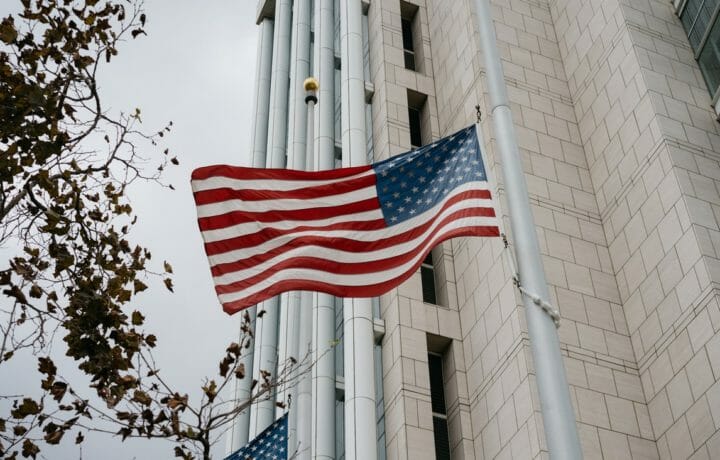
If you’re at work today, you’re not alone. More than half of Americans clocked in. According to the U.S. Bureau of Labor Statistics (BLS), 43% of civilian workers receive the day after Thanksgiving as a paid holiday – meaning well over half don’t automatically get a paid day off.
A separate BLS Day After Thanksgiving Profile notes that paid holiday access ranges from 56% in management, business, and financial jobs down to 30% in service occupations, with union workers (55%) more likely to receive the holiday than nonunion workers (40%). Moreover, because the day after Thanksgiving is not a federal holiday and coincides with Black Friday, employees in retail, food service, healthcare, public safety, hospitality, and travel are frequently required to work.
There were 11 federal holidays in 2026, including Thanksgiving. These public holidays are established by U.S. law (5 U.S.C. 6103), and non-essential federal government offices close while federal employees typically receive paid time off. In addition, every four years, federal workers in the Washington, D.C., area receive Inauguration Day off.
Federal holidays legally apply to federal employees and the District of Columbia, though many states, banks, and private employers choose to observe them.
When Are the Federal Holidays
The days on which federal holidays fall are split between fixed-date observances, including New Year’s Day (January 1), Juneteenth (June 19), Independence Day (July 4), Veterans Day (November 11), and Christmas Day (December 25); and floating Monday or Thursday schedules, which include the Birthday of Martin Luther King Jr. in January, Presidents’ Day in February, Memorial Day in May, Labor Day in September, Columbus Day in October, and Thanksgiving in November.
Sorry, there are no federal holidays in March, April, or August!
Federal Holidays HAVEN’T Always Been a Thing
Until 1870, there weren’t actually any federal holidays. It was only that year that Congress passed a bill making Christmas Day, New Year’s Day, Independence Day, and Thanksgiving Day unpaid federal holidays for federal employees in Washington, D.C., not the whole country.
That didn’t come until 1885, when the holiday status was later extended to cover all federal employees across the entire United States. It wasn’t until 1938 that Congress enacted laws providing paid time off for federal holidays, including Christmas.
Yes, even until the 1930s, Christmas wasn’t a paid holiday. But that’s not because Uncle Sam was being a Scrooge.
It should be noted that Christmas wasn’t widely celebrated until the middle of the 19th century in the United States. For a long time, December 25 was remembered more for when General George Washington crossed the Delaware River during the American Revolution in 1776 to attack the Hessians at Trenton. The German state-controlled auxiliary troops also likely weren’t drunk or hungover from any Christmas celebrations. Rather, they were caught off guard by the winter storm and by their disbelief that Washington would attack!
Labor Day became a federal holiday only after labor movement advocacy in 1894. Columbus Day became a federal holiday in 1937, and Armistice Day was made a federal holiday to mark the end of the First World War on November 11, in 1938. It was renamed Veterans Day in 1954 to honor all U.S. military veterans.
In 1941, Congress fixed Thanksgiving to the fourth Thursday in November – but sorry, nothing was said about the day after!
With the passage of the Uniform Monday Holiday Act in 1968, several holidays were moved to Monday to create three-day weekends. It formally combined George Washington’s and Abraham Lincoln’s birthdays into a single holiday on the third Monday in February, now widely known as Presidents’ Day.
Decoration Day, which originated after the American Civil War, was officially designated Memorial Day and moved to the last Monday in May.
In 1983, Congress established Martin Luther King Jr. Day, honoring the slain civil rights leader. It was just five years ago, in 2021, that Juneteenth National Independence Day was established as a federal holiday, commemorating the end of slavery in the United States.
No Easter, Never Has Been
There is sometimes a misconception that Good Friday and/or Easter are federal holidays, but they are not. Easter always falls on a Sunday, which is already a standard non-working day for most federal offices and employees.
The U.S. government has typically avoided creating new holidays explicitly tied to a single religion to prevent First Amendment Establishment Clause issues. While Christmas is a federal holiday, it became widely entrenched in American culture with broad secular traditions.
Still, just last year there was a failed effort to make Easter Monday a federal holiday. Resolutions were introduced in the United States Senate and the House of Representatives. Both S. 1426 and H.R. 2951 were companion/related versions of the Easter Monday Act of 2025 in the 119th Congress, which proposed amending Title 5 of the United States Code to designate Easter Monday as a federal legal public holiday. Neither reached a floor vote, and each remains in committee.
It is unlikely that another holiday could be added. OpenTheBooks estimated in 2021 that a single paid federal holiday costs taxpayers over $800 million for civilian federal employees – and approaches $1 billion when accounting for military and postal workers. Some economists counter that short-term output dips can be offset by rest, productivity, or shifts in work and spending schedules.
Given that those not working today may be out shopping, this could be a reminder of that fact.


