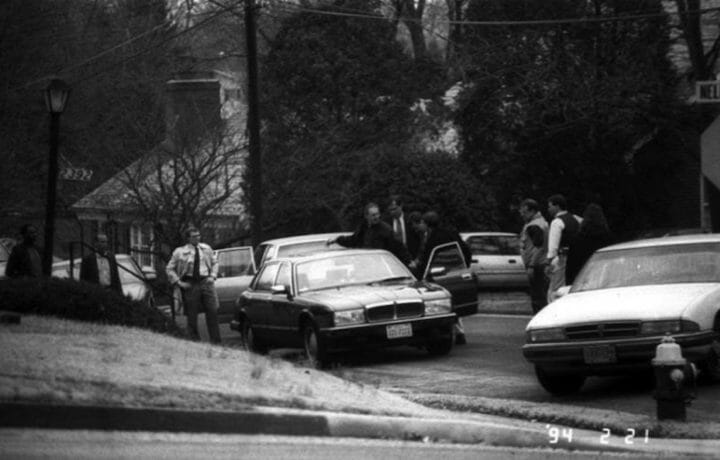
Aldrich Ames died this week at 84, ending three decades of incarceration at FCI Cumberland. His passing will generate the usual retrospective coverage, but those summaries rarely capture the full measure of what he did, or the lives destroyed by his decisions.
Ames – volunteers for cash
Ames volunteered his services to the KGB in 1985. Over the next nine years, he compromised virtually every asset he came to know, through his position as the counterintelligence lead for the Soviet/Russian target. The result was not abstract intelligence loss. His actions led to arrests, torture, and executions. At least nine CIA assets were killed because of Ames Others disappeared into the Soviet system, never to be heard from again. These were individuals who had taken extraordinary risks to provide the United States with insight into an adversary that defined the era. Ames sold their identities for cash.
His motivations were not ideological. They were financial and self-serving. The KGB paid him more than two million dollars, which he used to fund a lifestyle far beyond his government salary. In hindsight it was clear his spending, security violations, and personal conduct should have triggered intervention, yet such was not the case.
As one who served within the CIA during Ames’ period of betrayal and whose own cases were directly affected by his actions, there is no remorse for him at this time. The human cost of his actions is not theoretical. It is personal and it is permanent.
Ames – exposed systemic weaknesses
The investigation which uncovered Ames and the subsequent prosecution and debriefings exposed systemic weaknesses that the national security enterprise has spent decades working to close. His living beyond his means, rationalized as his spouse’s family money, brought into being the financial disclosure protocols (SEAD 3 – Security Executive Agent Directive). Additionally, all were reminded that the polygraph is a tool, and not a truth box. Ame’s polygraphs took place, his results rationalized. His personnel failings, to include alcohol were tolerated. His case remains one of the most studied insider threat failures in United States intelligence history, and for good reason. The evolution toward continuous vetting finds its roots within the Ames damage assessment.
Ames – remorse? Never
What is often overlooked is Ames’ posture after his arrest. He pled guilty in exchange for leanancy for his spouse, who was sentenced to five years in prison. His son, was sent to live with extended family in Colombia. Ames readily acknowledged what he had done, but he never demonstrated genuine remorse. He framed his espionage as a financial decision, not a moral crime. He did not publicly reckon with the men executed because of his disclosures or the families left behind. He was often quoted as reflecting upon their demise with the feeling, that they knew the risks. His statements reflected a man who viewed espionage as a transaction, not a betrayal of colleagues, sources, and mission.
Ames’ death does not close the chapter on the damage he caused. Russia continues to benefit from the intelligence he provided. The operational losses he triggered reshaped United States access to critical Soviet and later Russian targets. Some gaps were never fully recovered.

