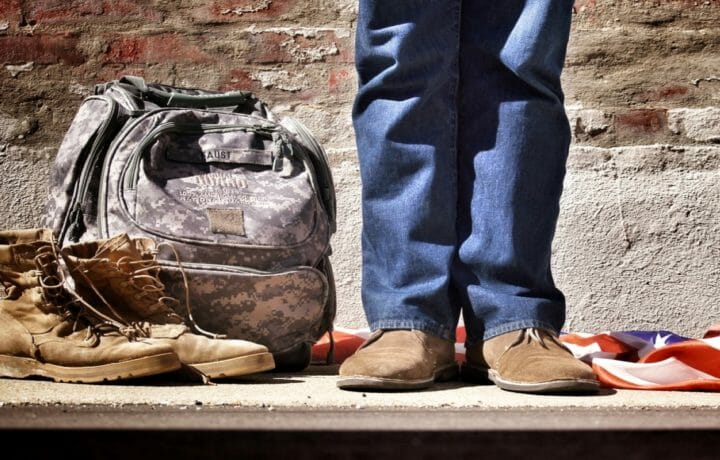
For all the conversations happening around national security, workforce readiness, and leadership in America, there is still one group that often gets discussed more than it gets listened to: veterans.
That disconnect matters.
I see this all of the time at veteran hiring events, resource expos, and the like. More organizations in attendance offer help with VA ratings, health resources, and continuing education. But where are the actual opportunities to continue supporting ‘the mission’? Where are the companies we were promised that would be beating down our doors to get us to join their teams?
Finding Purpose After Service
Veterans do not leave military service and suddenly lose the ability to contribute to the national mission. If anything, many carry forward years of experience operating in high-pressure environments, leading diverse teams, navigating uncertainty, and understanding sacrifice in ways that cannot easily be taught in a classroom or corporate retreat. Yet too often, veteran advocacy is treated like a ceremonial gesture instead of a strategic necessity.
National security is not just about weapons systems, intelligence reports, or military operations overseas. It is also about the people trusted to protect institutions, infrastructure, information, and culture here at home. Veterans remain part of that ecosystem long after they take the uniform off.
I know firsthand how difficult the transition can be. After spending years in service, many veterans step into civilian workplaces where their experience is misunderstood, minimized, or translated into generic buzzwords that fail to capture what they actually accomplished. A combat deployment becomes “project management.” Leading soldiers through chaos becomes “team supervision.” Critical decision-making under pressure gets reduced to a bullet point on a résumé.
And people wonder why veterans sometimes feel disconnected after service.
Don’t confuse advocacy for charity
Advocacy matters because transition is not just about employment. It is about identity, purpose, and belonging. Veterans are often leaving behind not only a career, but an entire culture built around shared mission, accountability, and trust. When organizations fail to understand that, they risk losing highly capable people who still want to serve in meaningful ways.
This is especially important in the national security space. Government agencies, defense contractors, technology companies, emergency management organizations, and policy institutions all benefit from the veteran perspectives. Veterans understand operational realities. We understand the human cost of policy decisions, and we understand what leadership looks like when conditions are imperfect and consequences are real.
That perspective is desperately needed right now.
Highly Capable and Adaptable
We are living in a time where national security challenges are no longer limited to traditional battlefields. Cyberattacks, disinformation campaigns, artificial intelligence, insider threats, and social instability all play a role in shaping the future security environment.
Veterans bring experience operating inside complex systems where adaptability and resilience are critical. They are often uniquely prepared to recognize patterns, anticipate risk, and work collaboratively under pressure. But advocacy cannot stop at hiring initiatives or social media appreciation posts once a year.
If companies and institutions truly want veterans to succeed, workplace culture has to evolve alongside recruitment efforts. Too many veterans enter civilian spaces where asking for help is viewed as weakness, where mental health conversations feel performative, or where leadership lacks the empathy to understand military transition. Sometimes the hardest part of leaving service is not finding a job. It is finding an environment where your experience is respected without being romanticized.
Veterans do not need to be treated like superheroes. They need to be treated like human beings with valuable experience, complicated stories, and transferable skills.
Get to Know Us
Good veteran advocacy also means understanding that not every veteran has the same experience. A retired infantryman, a military intelligence analyst, a public affairs specialist, and a logistics planner may all leave service with entirely different strengths and struggles. Some transition smoothly. Others quietly battle anxiety, depression, financial stress, or a loss of identity while trying to appear “fine” on the outside.
That is why mentorship matters. One of the most powerful things veterans can do for each other is help bridge the gap between military and civilian life. Sometimes advocacy is helping another veteran rewrite a résumé. Or it is making an introduction that leads to a career opportunity. It can also be as simple as checking in on someone who suddenly feels isolated after years of operating within a tight-knit team.
More than just a talking point
Policy matters too. Veteran advocacy should not become a political talking point that only surfaces during election cycles or national holidays. Supporting veterans means investing in mental health resources, transition programs, employment protections, education opportunities, and systems that actually work when veterans need them most. It also means listening to veterans when discussing foreign policy, military readiness, and the long-term effects of war.
Too often, society celebrates service while ignoring the aftermath of it. I believe that we still have an important role to play in shaping the future of national security. Our impact is more than government service, but through leadership in media, technology, education, business, and community engagement. The ability to adapt, communicate under pressure, and remain mission-focused are skills that continue to matter long after military service ends.
But those strengths only continue to grow when veterans feel supported instead of discarded once the uniform comes off.


