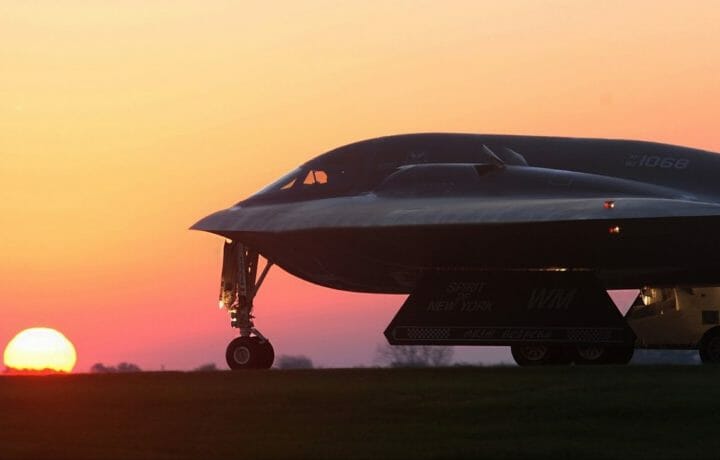
In January, Chinese national Qilin Wu was charged with photographing a United States Air Force Northrop B-2 Spirit long-range bomber at Whiteman Air Force Base (AFB), Missouri. According to the criminal complaint, on December 2, 2025, Wu was stopped at the perimeter of the military installation that houses the entire fleet of flying-wing bombers.
Members of the 509th Security Forces Squadron responded to reports of a “suspicious minivan” on Whiteman AFB’s perimeter. Wu told the security personnel he was watching the B-2. Security told him photography wasn’t allowed.
Still, he returned later and was subsequently detained.
Wu acknowledged that he had taken videos and numerous photos of the B-2 Spirit, sections of Whiteman AFB, and other military equipment. In April, Wu, who also acknowledged he had entered the United States illegally in June 2023, pleaded guilty before U.S. Magistrate Judge Jill A. Morris to one count of taking photographs of a vital military installation.
Immigration and Customs Enforcement (ICE) had already arrested Wu. Still, because it lacked detention space, ICE released him on his own recognizance, and he was awaiting immigration removal proceedings originally scheduled for February 9, 2027. Prosecutors then arrested him again on December 3, 2025.
Cold War Law Used in Prosecution
Wu was sentenced to six months in federal custody following a case built on a 76-year-old executive order signed by President Harry Truman, the United States Air Force Office of Special Investigations (AFOSI) confirmed last Thursday.
“The conviction showed how a Cold War-era legal framework can be used against repeated, unauthorized photography around sensitive military installations, and how Special Agents will investigate similar cases before they develop into something more,” the AFOSI explained.
“For our Special Agents, this isn’t about a single case,” said Col. David Bethel, commander of the Air Force Office of Special Investigations Region 8. “It’s about recognizing that the operating environment has changed.”
Photography is Legal, But Conditions Apply
The photographing of military installations from public land is generally lawful and protected. There are plenty of plane spotters who camp out near bases, and there aren’t issues provided no trespassing occurs and no other laws are broken.
In Wu’s case, he was warned repeatedly not to photograph the base. Wu also admitted that he had photographed aircraft and installations at other U.S. military bases, including ones in Florida and Virginia.
“Section 795 of Title 18, together with Executive Order 10104, prohibits unauthorized photographs, sketches, maps and other visual representations of designated military installations, aircraft, weapons and equipment requiring protection from the general dissemination of information,” the AFOSI emphasized.
EO 10104, which Truman signed on February 1, 1950, established the framework for designating military installations and equipment subject to these restrictions, TheAviationist.com reported. It defined vital military, naval, and air-force installations and classified equipment as requiring protection against the general dissemination of information.
In addition, Section 795 of Title 18 of the U.S. Code also provides for criminal penalties for the unauthorized photography and other visual representations. A base commander or higher authority must grant permission, and failure to do so can result in a fine, up to one year in prison, or both. Breaking this law is treated as a federal misdemeanor.
Repeated Warnings
The fact that Wu returned after being told not to photograph the base led to a deeper investigation, which also determined he was in the country illegally. Wu was remanded to the U.S. Marshals Service and processed by an ICE detailer. He now faces deportation to China after he serves his sentence.
“When someone gathers information around a sensitive military installation, AFOSI has the tools to hold them accountable,” Bethel said.
“AFOSI will continue to identify, assess, and investigate suspected unauthorized photography around protected installations and equipment, officials said, while evaluating each incident based on its specific facts and circumstances,” the Air Force added.


