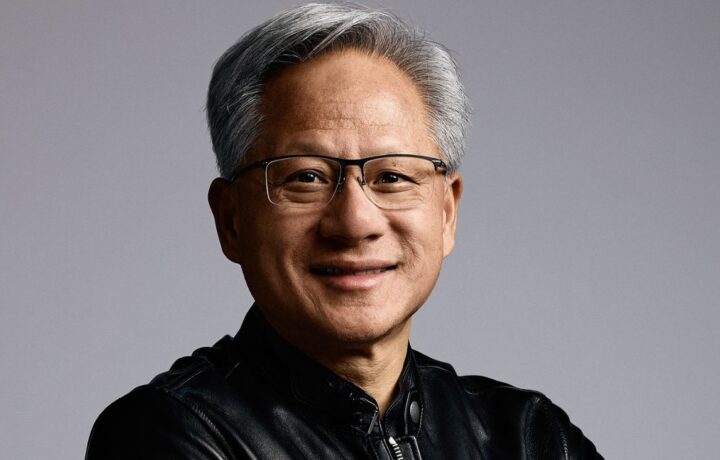
On November 9, the White House involved itself in the brouhaha over Alice Huang (same surname, not related), the paramour of NVIDIA CEO Jensen Huang. U.S. intelligence assesses she is an asset of the Chinese Ministry of State Security (MSS). President Trump commented that Jensen Huang had contacted him directly, claiming he had been duped and had no idea she was a spy. On November 12, Jensen Huang resigned from NVIDIA.
Alice Huang and the Intelligence Assessment
According to Associated Press reporting sourced to U.S. intelligence, Alice Huang was assessed to have been recruited by China’s Ministry of State Security. Lawful U.S. electronic surveillance of her, conducted for at least a year, revealed ongoing contact with an American citizen, later identified as Jensen Huang.
NOTE: Alice Huang (also known as Huang Le) is a Chinese citizen and former executive at the Singapore-based company Megaspeed. She is not related to Jensen Huang, the Taiwanese-American co-founder and until November 12, CEO of NVIDIA. The two share a common Chinese surname and nothing else. U.S. intelligence assessments treat them as unrelated individuals, and NVIDIA has repeatedly noted the absence of any family connection.
A classified memo prepared under Secretary of State Marco Rubio circulated among senior officials in spring 2026, warning of the relationship ahead of the president’s May trip to China. President Trump had been briefed on the intelligence in 2025. For a memo warning of the relationship to circulate among senior officials, someone in the administration had to have requested that Jensen Huang’s identity be unmasked.
One need not be schooled in the MSS operating directive to understand the obvious objectives in maintaining close and continuing access to the CEO of NVIDIA:
- Information on advanced U.S. AI chips and NVIDIA’s commercial plans.
- Insight into, and possible influence over, U.S. policy decisions on export controls.
Jensen Huang’s unusually close advisory role to President Trump on AI matters made the second objective especially valuable.
Jensen HUANG’S access to secrets
It is not publicly known whether Jensen Huang holds a national security clearance. NVIDIA is one of eight companies the War Department tapped in May to deploy AI capabilities on its classified networks, but the CEO’s individual clearance status has not been disclosed. Clearance or not, the intelligence value of sustained personal access to the CEO is substantial. Product priorities, customer decisions, internal views on export controls, and the president’s evolving positions on AI policy all sit within the potential reach of such a relationship. That Jensen Huang could call the President directly to plead his case, and that the President publicly defended him, speaks to his privileged access to the White House. That said, nothing released so far shows that any classified information changed hands.
Megaspeed Under Investigation
Megaspeed, the Singapore company where Alice Huang held a senior role, has been under investigation in multiple countries, including the United States. Reporting has placed the company’s purchases of NVIDIA products in the range of several billion dollars, with one account citing facilitation of at least $7.5 billion in chip shipments toward Chinese firms. Commerce opened an inquiry into possible chip diversion in late 2024 and later handed the case to the Justice Department, which now has an open criminal investigation.
Even if every transaction were legal and proper, the commercial relationship must be viewed through a counterintelligence and national security lens, given the U.S. intelligence assessment that Alice Huang was working at the direction of the MSS.
Official Statements and the Present Reality
The intelligence community assesses that Alice Huang is an MSS asset, and the DOJ is investigating Megaspeed for diversion of NVIDIA restricted chips to China. Not unexpectedly, NVIDIA’s board says it has “no reason to believe that either national security or NVIDIA secrets were compromised,” while launching its own independent investigation. Separately, China’s Foreign Ministry has rejected the allegations as unsubstantiated.
China isn’t going to stand up and say, yes, we played the long game here, and once we caught Jensen Huang’s eye with both billions in sales and Alice Huang, we were sitting pretty. The NVIDIA board’s statement comes across as premature, a conclusion their investigation has yet to determine. Take these statements with a grain of salt. Corporate boards and foreign governments have institutional reasons to minimize exposure. The cow has already left the barn. The relationship occurred, surveillance identified it, the memo circulated, and Jensen Huang has admitted the affair. This is damage control.
While the DOJ pursues its investigation, we have President Trump engaging in the public defense of Jensen Huang, saying he “had absolutely no idea that the person in question was a spy” and adding, “I know the FBI is looking into it in terms of something else, and I think that he’ll be in good shape.” Then came another peccadillo: on November 11, reports surfaced that Jensen Huang had also had an affair with a subordinate at NVIDIA. The next day, he resigned as CEO and stepped down from his board seat.
What is visible at this time is a U.S. intelligence assessment of Alice Huang’s cultivation of a strategically positioned executive, concurrent commercial activity under multi-country scrutiny, and a board that went from defending continuity to accepting its CEO’s resignation within days. That is an awful lot of toothpaste to try and get back in the tube.


