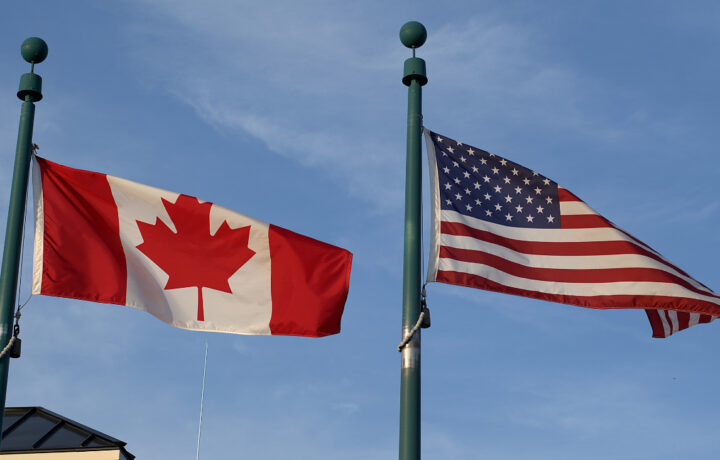
Canada may be America’s friendliest neighbor, but apparently even friendly neighbors aren’t immune from Pentagon scrutiny. Defense Secretary Pete Hegseth has issued a classified memorandum restricting certain interactions between U.S. and Canadian military officials, according to reporting from The Washington Post. The move comes amid growing political tensions between Washington and Ottawa amid trade talks and presidential and prime minister spats, and raises questions about the future of one of America’s closest defense partnerships.
For anyone with a security clearances, the news also offers a timely reminder: Canada is still a foreign country. And when it comes to foreign travel, foreign contacts, and security clearance reporting requirements, being an ally doesn’t necessarily mean getting a pass.
What Does Hegseth’s Canada Memo Actually Say?
The full contents of Hegseth’s memorandum have not been publicly released, but officials familiar with the directive say it places new limitations on certain military engagements with Canada.
Speaking at the Halifax International Security Forum, Sen. Mike Rounds indicated that the restrictions largely concern informal interactions, including participation in think tank events, conferences, and social engagements involving Canadian military officials. Importantly, the Pentagon has indicated that the directive does not change intelligence sharing between the two countries or their cooperation through NATO and the North American Aerospace Defense Command (NORAD).
That’s an important distinction.
Canada isn’t simply another international partner. It’s a member of the Five Eyes intelligence-sharing alliance, alongside the United States, United Kingdom, Australia, and New Zealand. The two countries share decades of military cooperation, intelligence relationships, and responsibility for defending North American airspace.
The reported restrictions don’t change that history, and they shouldn’t be interpreted as a wholesale breakdown in U.S.-Canada defense cooperation. They do, however, illustrate how quickly the rules governing international engagement can change, even between close allies.
Does Travel to Canada Affect Your Security Clearance?
Here’s where the issue offers a relevant reminder for security clearance holders.
For most Americans, traveling to Canada doesn’t feel particularly foreign. Depending on where you live, crossing the border might be easier than traveling to another state. Canadians are our neighbors, colleagues, friends, and sometimes family members.
But your security clearance doesn’t distinguish between foreign countries based solely on how friendly their governments happen to be.
Under Security Executive Agent Directive 3 (SEAD 3), individuals with access to classified information have reporting responsibilities that can include unofficial foreign travel. That includes Canada.
For cleared defense contractors, unofficial foreign travel generally must be reported through the appropriate security channels before departure, subject to applicable exceptions and agency-specific procedures.
The SF-86 security clearance questionnaire also requires applicants to disclose qualifying foreign travel during the relevant reporting period. DCSA guidance specifically identifies even short trips to Canada or Mexico as travel that needs to be reported.
A weekend in Toronto, a ski trip to British Columbia, or a quick drive across the border to visit friends may seem routine. From a security reporting standpoint, however, crossing an international border is still crossing an international border. That doesn’t mean the government considers Canada inherently dangerous. It means the reporting rules don’t disappear just because the destination is familiar.
What About Canadian Friends, Family, or Romantic Relationships?
Foreign contacts are another area where cleared professionals sometimes make assumptions.
If you’re dating a Canadian citizen, have close Canadian friends, or regularly interact with Canadian colleagues, does that mean your clearance is at risk? No. But it does mean it needs to be reported.
Having relationships with foreign nationals is not automatically disqualifying. The government’s concern is generally whether a relationship could create a risk of foreign influence, coercion, divided loyalties, or unauthorized disclosure of sensitive information.
The nature of the relationship matters. An occasional professional interaction with a Canadian colleague is different from a close personal relationship with a Canadian citizen. And both are different from a situation involving foreign government officials seeking sensitive information. The important point is that security clearance holders shouldn’t assume a relationship is exempt from reporting simply because the individual comes from an allied country.
What the Canada Memo Doesn’t Mean for Clearance Holders
It’s also important not to overstate the significance of Hegseth’s directive.
Based on what has been publicly reported, the memorandum concerns certain defense engagements between U.S. and Canadian officials. It is not a change to the adjudicative guidelines governing individual security clearance eligibility.
There is no publicly established basis to conclude that Americans with Canadian spouses, friends, or professional contacts now face heightened clearance scrutiny simply because of the memorandum. And the memo certainly doesn’t establish a new general prohibition on personal travel to Canada.
The existing rules governing foreign contacts and travel remain the relevant starting point for cleared professionals, along with any additional requirements imposed by their agency or security program.
For military personnel and federal employees whose official duties involve Canadian counterparts, the directive may introduce additional approval requirements. Those individuals should follow guidance from their commands and security offices rather than assuming the public reporting provides a complete picture.
For cleared professionals, the takeaway is straightforward: Know your reporting requirements. Disclose qualifying foreign travel and contacts. And when you’re unsure whether something needs to be reported, ask your facility security officer or agency security team. Whether you’re canoodling or cavorting over the border – just keep those canuck reporting requirements in line with adjudicative guidelines.


