” Courage is being scared to death—and saddling up anyway.” – Gregory “Pappy” Boyington
Growing up in the 70s, Thursday nights were almost always good for television viewing. Hawaii Five-O was a favorite. I never missed an episode of Emergency, and Barney Miller was always good for a laugh. But nothing beat Robert Conrad – who I’d admired since the days of The Wild, Wild West – strapping into a Vought F4U-1 Corsair for Black Sheep Squadron.
Conrad’s character in show, Gregory “Pappy” Boyington, remains one of the most complex and compelling combat leaders in American military history. A former prisoner of war and Medal of Honor recipient, Boyington embodied a paradoxical blend of audacity, imperfection, charisma, and tactical brilliance – qualities well-suited to an actor of Conrad’s style. His leadership legacy is not one of polished professionalism, but of raw combat skill forged through risk, resilience, and relentlessness.
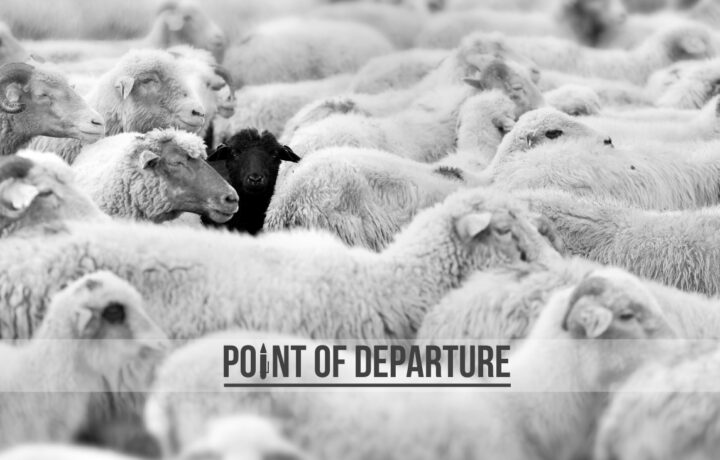
In every conceivable way, he was a black sheep.
The Black Sheep Squadron
Boyington was born just 90 miles north of my hometown in the Idaho panhandle, so his name was a familiar one in our area. When he graduated with a degree in aeronautical engineering from the University of Washington in 1934, he made earning his pilot’s wings a priority. He earned those wings as a Marine aviator in 1937. And when the United States entered World War II, Boyington resigned his commission to join the American Volunteer Group – the renowned Flying Tigers – in China. There he honed the hyper-aggressive air combat tactics that became his hallmark.
After being recalled to the Marine Corps in 1942, Boyington took command of Marine Fighter Attack Squadron 214 (VMF-214) the following year. The squadron consisted largely of replacement pilots, castoffs, and misfits – like the man who led them, black sheep. Under Boyington’s leadership, they grew to become one of the most effective fighter squadrons in the Pacific, along the way demonstrating the audacity and bravado that shaped their identity.
1. Credibility is built in shared risk.
Boyington’s authority grew from authenticity. He flew the same dangerous mission alongside his men, sharing the same risks. Leaders who share hardship – or misery – earn trust faster than those who observe it from distance. In high-risk environments, visible presence matters.
2. Talent can be forged from imperfect teams.
If you’ve ever led an organization of misfits, you can understand VMF-214. Boyington recognized the individual nature they brought and leveraged it while bonding them through a shared mission and vision. A reminder that high-performing teams are often built from unconventional talent and united by clear purpose.
3. Aggression must be tempered with judgment.
While Boyington’s aggressive flying brought success, it also carried significant risks. Effective leadership requires calibrated aggression – knowing when to push the envelope and when to take a knee. His career illustrates both the potential and the inherent danger of operating at the tactical edge.
4. Identity drives performance.
The Black Sheep label fostered a powerful sense of esprit de corps. By embracing the concept of the black sheep, Boyington transformed what others saw as a liability into a source of pride. Leaders who shape the narrative and identity of an organization influence morale profoundly.
5. Resilience outlasts circumstance.
Combat victories may have earned Boyington fame, but his captivity revealed his character. Leadership is not only about decisive action; it is about sustained perseverance when action is impossible.
Boyington’s leadership style defies simple categorization. He was charismatic but abrasive. Courageous but fatally flawed. Disciplined in combat yet personally undisciplined. He proved that leadership wasn’t always something reserved for the polished and perfected. It rests with those willing to accept responsibility, embrace risk, and persevere through danger. His very complexity is precisely why his legacy remains relevant today.
Words and Deeds
Boyington retired from the Marine Corps as a colonel in 1947. In many ways, his post-war life reflected a pattern that proved so challenging in his early years, when his struggles with discipline and alcohol threatened his career. But he pressed forward into a very public life and maintained the same bravado that served to humanize his leadership.
Boyington captured this fighting spirit in his 1989 autobiography, Baa Baa Black Sheep, a book that holds a place on my bookshelf today alongside some of the classics from the Second World War. In his book, Boyington laid bare his flaws, while at the same time demonstrating the kind of common-sense wisdom that made his wartime record one of the most noteworthy in Marine aviation history.
1. The spirit of the offense.
Boyington’s aggressive pursuit of the offensive characterized his leadership. He abhorred indecisiveness and defensive hesitation – instead embracing risk and uncertainty while pressing attacks with purpose. His philosophy was simple: overwhelm the enemy before they can act. In aerial combat, this aggressiveness created both psychological and tactical advantage. One of his defining statements captures this mindset: “Show me a hero and I’ll show you a bum.” This wasn’t false modesty. It was a rejection of the hero myth. For Boyington, success – and victory – didn’t come from seeking acclaim, but from rolling up your sleeves and doing the brutal, disciplined work of combat.
2. Lead by example.
Never one to hang back when the shooting started, Boyington flew into battle alongside his men and personally engaged enemy aircraft with a style all his own. By the end of his combat tour in 1943, he was an ace several times over, amassing 26 kills. His presence in the air inspired confidence. Pilots followed him because he demonstrated steadfast courage in real time. He earned his credibility as a leader in the cockpit. As he once remarked, “If you’re not living on the edge, you’re taking up too much room.” Such words capture his belief that combat leaders must accept the consequences of risk rather than seek the relative safety gained by letting others face those risks alone.
3. Loyalty.
Though brash and often irreverent toward authority, Boyington was fiercely loyal to his pilots. He understood their inexperience, fear, and uncertainty – many were barely out of flight school. He forged them into a cohesive team through shared hardship and high expectations. He later reflected, “The Black Sheep were not choirboys, but they were my choirboys.” Loyalty was fundamental to his protective, often tribal, leadership style. He built identity around belonging – even among castoffs no one else wanted.
4. Resilience in the face of adversity.
On January 3, 1944, Boyington was shot down and captured by the Japanese. He spent more than 20 months as a prisoner of war, where physical deprivation and brutality tested him deeply. Resilience became a defining theme for him. After the war, when he learned he would be receiving the Medal of Honor and the Navy Cross, he remarked with characteristic bluntness, “I wasn’t a hero. I was just doing my job.” For Boyington, leadership was demonstrated through action under pressure. He didn’t need the applause. He was a survivor.
5. Authentic leadership.
From the earliest days of his career, Boyington struggled with discipline and drinking, issues which plagued his ability to adjust to a new post-war reality. His flaws were real and public, yet these imperfections made study of his leadership more valuable, not less. He was far from a sanitized hero; he was intensely human. In Baa Baa Black Sheep, he wrote: “I learned early that life is a fight, and if you don’t fight, you lose.” For Boyington, leadership required confrontation—with your enemies, your circumstances in life, and yourself.
In the end, Boyington’s leadership was forged in combat, tempered in captivity, and preserved through the fierce loyalty of the Black Sheep he led. His story reminds us that leadership is about presence—about showing up, fighting hard, and being your true self when it matters most.


