A newly released DoD Inspector General report addressed the decisions of retired Army Major General Antonio Aguto which demonstrates that risky behavior by insiders occurs at all ranks. Aguto left active duty in November 2024 under a conditional retirement, which meant the Army held his retirement grade open while the investigation ran its course. He later appealed portions of the preliminary findings, but the IG wrote that his objections “did not change our final conclusions.”
The report outlines a series of judgment failures that only surfaced because subordinates and Embassy personnel refused to let RHIP override established standards. The mishandled classified maps on the Kyiv to Poland train, the separate intoxication and concussion incident during a May 2024 trip to Ukraine, and additional lapses in how classified information was discussed and accessed all point to the same issue: seniority does not immunize anyone from responsibility or accountability.
Mishandling Classified Maps and Transport Violations
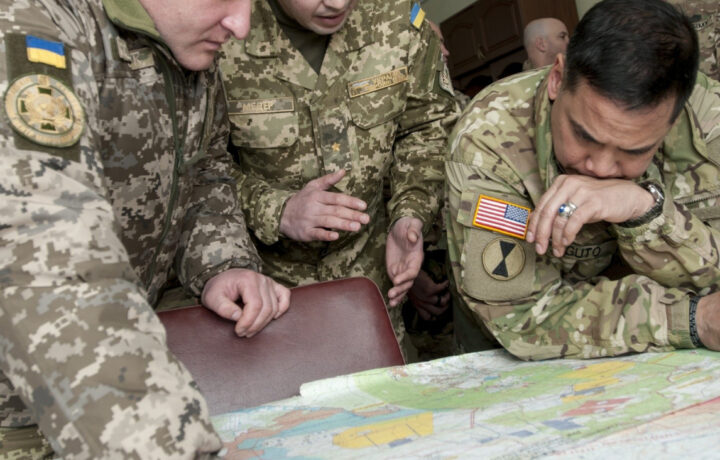
The first major finding centers on Aguto’s decision to hand‑carry Secret‑level maps into Ukraine in an unsecured plastic tube. The maps were not packaged in accordance with DoDM 5200.01, nor were they transported via diplomatic courier as required by Chief of Mission Security Directive 2022‑06. The process is not complex and is designed to ensure that classified materials crossing borders are not subject to inspection by foreign nationals. Travelers, including Aguto, or members of his staff could have easily been documented as couriers and the material protected as prescribed. They didn’t.
On the April 3–4 , 2024 return trip from Kyiv to Poland, the travelers carried the tub back on the train. This time, they forgot the maps, and they were left behind on the Ukrainian train charted by the Department of State. When the maps were discovered missing by Aguto and staff, they reached out to the Regional Security Officer (RSO) at the U.S. Embassy Kyiv. The RSO subsequently contacted Ukrainian Train Security who recovered the tube containing the classified materials, and returned them to the RSO at the U.S. Embassy Kyiv. The RSO filed a formal incident report.
The Kyiv-Warsaw train is one of the overland means to travel to Kyiv and the journey takes 15-plus hours. In 2025, this writer made the trek on a commercial train. The trip is long, arduous, includes a stop at the Polish/Ukraine border for inspection and gauge change of the wheels on the train cars. Ukrainian security personnel are present, as are Polish personnel. Each car has assigned an attendant. The environment, while providing a modicum of privacy is not a “secure environment.”
Intoxication Incident and Concussion Raise Questions About Judgment
The following month, the IG report tells us that Aguto once again demonstrated a lack of judgment while in Ukraine. During a May 13, 2024 dinner with his Ukrainian counterparts, he and his counterpart consumed two bottles of brandy. Testimony would show that over the course of the six‑hour dinner, Aguto exceeded the USEUCOM GO‑1 two‑drink limit (i.e., no consumption of more than two alcoholic beverages in a 24-hour period). Witnesses described Aguto as being visibly intoxicated. Upon return to his hotel, Aguto fell and hit his head. Over the course of the next day, he would fall additional times, culminating in obtaining medical care from the Embassy medical staff and a local hospital in Kyiv. It was determined he suffered a concussion from the original fall.
Upon arrival at the Embassy for meetings with the country-team, as well as Secretary Blinken (SecState), Aguto was described as appearing dazed, slow and reportedly carried the smell of alcohol. In a nutshell, he was incoherent and unable to function at a professional level. The IG concluded he was not intoxicated that day, but impaired due to the concussion caused by the previous night’s drinking. Subsequent to the meeting at the Embassy.
Insider Threat Reporting: How Subordinates and Embassy Staff Raised the Alarm
Within weeks of the second incident, the OIG received three separate reports. During the subsequent investigation numerous interviews with witnesses alleged additional incidents where Aguto ignored processes and procedures designed to protect classified information from inadvertent disclosure.
Improper Handling of Classified Information in Operational and Public Settings
In July 2024, Aguto discussed TS/NOFORN and SECRET information in an open‑air pavilion despite staff warnings. In December 2023, he accessed classified material on a SIPR tablet in a Kyiv bomb shelter during an air raid. Both incidents were referred to EUCOM’s Special Security Office.
Individually, each might be dismissed as a moment of poor judgment under operational pressure. Taken together with the map incident, and the intoxication in Kyiv, they form a picture of enhanced risk: a senior leader who may have viewed rules were for others.
Lessons on Insider Risk, Leadership Accountability, and Security Culture
- Insider risk is rank‑agnostic. Seniority does not eliminate the possibility of poor judgment, complacency, or disregard for established controls.
- Patterns matter more than individual incidents. The map mishandling, the openair classified discussions, and the SIPR access in a shelter are not isolated events. Together, they reveal a posture toward classified material that increases institutional risk.
- The system works when people speak up. Every major finding in the report exists because subordinates, staff officers, and Embassy personnel refused to let RHIP distort reporting obligations.
A culture of trust and security is built, or eroded, one decision at a time. The DoD IG report on Aguto serves as a case study on how decisions, even at the highest levels, shape and reshape the risk environment.


