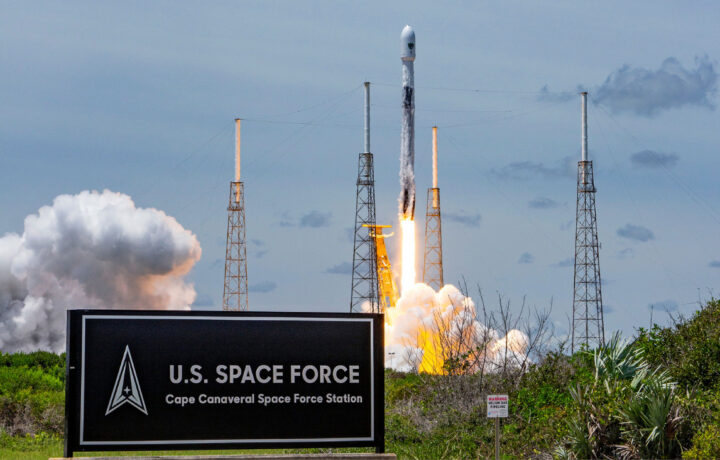
When you hear the words “Space Force,” do you take it seriously? Does it make you think of science fiction, rockets, or even the jokes that surrounded the branch’s creation in 2019? What many people don’t realize is that the United States Space Force was not created to prepare for imaginary battles among the stars. It was established because space has become and will increasingly be one of the most critical domains for national security, economic stability, and everyday life.
It is safe to say that Americans don’t understand how much of their daily lives rely on technology located in space. We rely on space-based systems for everything from GPS navigation and banking transactions to weather forecasting and emergency communications. The military depends on satellites to coordinate forces, gather intelligence, detect missile launches, and guide precision weapons.
As potential adversaries develop ways to disrupt or destroy those capabilities, military leaders determined that the U.S. needed a dedicated service focused solely on protecting America’s interests in space.
Why the Space Force Was Created
The U.S. Space Force officially became the sixth branch of the Armed Forces on December 20, 2019. According to military leaders and policymakers, the decision stemmed from the growing importance of space to both national security and daily life. For decades, the Air Force managed space missions. However, as threats evolved and the nation’s dependence on satellites increased, defense officials concluded that space required a dedicated organization with its own mission, culture, and focus.
“Space has become so important to our way of life, our economy, and our national security that we must be prepared as a Nation to protect it from hostile actions,” said Mark Esper, the former Secretary of Defense. He explained the reasoning behind the new service shortly after it was created.
The official history of the Space Force notes that the service was established because military leaders recognized that space was no longer a peaceful environment where the United States could operate uncontested. Instead, it had become a strategic domain where competitors were actively developing capabilities designed to challenge American advantages.
Title 10 of the United States Code, Section 9081, defines the Space Force’s responsibilities as providing freedom of operation in, from, and to space while conducting space operations and protecting U.S. interests beyond Earth’s atmosphere. Those responsibilities may sound broad, but they reflect how deeply modern society depends on systems operating hundreds or even thousands of miles above the planet.
Space Is Already a Warfighting Domain
One of the biggest misconceptions about the Space Force is that it exists to prepare for some future conflict in space. In reality, military leaders argue that space is already a warfighting domain because nearly every modern military operation depends on space-based capabilities.
American forces rely on satellites for communications, intelligence gathering, navigation, missile warning, weather monitoring, and precision targeting. If those systems were disrupted during a conflict, commanders could lose the ability to coordinate forces effectively, guide weapons accurately, or maintain situational awareness across the battlefield. This would create a major communications issue at all levels of any combat scenario.
Gen. Stephen Whiting, Commander of U.S. Space Command, highlighted the seriousness of that dependence when he told Congress, “should an adversary degrade or destroy our space capabilities, the joint force’s ability to fight as it is sized and designed would be immediately and materially impacted.”
The general’s warning underscores a reality that many Americans never see or even consider. Space systems are so integrated into military operations that their absence would create immediate challenges across every branch of the armed forces. In many ways, space superiority has become just as important as air superiority or naval dominance.
Space Affects Everyday Americans
The Space Force’s importance extends far beyond military operations. Most Americans interact with space-based technology every day without even realizing it.
GPS satellites help drivers navigate unfamiliar roads, help emergency responders reach people in need, and support everything from shipping logistics to ride-sharing apps. Satellite networks also help synchronize financial transactions, support telecommunications systems, monitor severe weather, and provide global connectivity that keeps businesses and governments functioning.
The official Space Force history emphasizes that modern commerce and communication depend heavily on space infrastructure. If satellites were suddenly unavailable, the effects would ripple across nearly every sector of society. Banking systems could experience disruptions, navigation services would become less reliable, weather forecasting would suffer, and communication networks could face significant challenges.
Former Chief of Space Operations Gen. B. Chance Saltzman has frequently pointed out that many Americans benefit from Space Force missions without ever realizing it. The service helps ensure that GPS remains available, communications systems remain functional, and critical infrastructure continues operating in support of both civilian and military users.
The Growing Threat from China and Russia
Another major reason for the Space Force’s creation was growing concern about threats from strategic competitors. American military leaders have repeatedly warned that nations such as China and Russia have invested heavily in technologies designed to challenge U.S. capabilities in space.
These threats include anti-satellite weapons, electronic warfare systems, cyber capabilities, and other tools that could potentially disrupt or disable critical space assets.
The Space Force’s official history notes that potential adversaries have developed threats both on Earth and in orbit, creating a more contested and competitive environment than at any previous point in the space age. This shift has forced military planners to view space not merely as a support function but as a domain that requires active defense and deterrence.
Gen. Chance Saltzman summarized the challenge: “the domain is now more contested than at any other point in history.” That assessment reflects a growing consensus among defense leaders that maintaining access to space can no longer be taken for granted.
The Numbers Behind the Mission
The Space Surveillance Network currently tracks more than 47,000 objects in orbit, helping operators avoid collisions and monitor potential threats. Those objects include active satellites, inactive spacecraft, and debris traveling at extremely high speeds.
The United States also operates a constellation of 31 active GPS satellites that provide positioning, navigation, and timing services to billions of users worldwide. Those services support military operations, emergency response efforts, transportation systems, financial networks, and countless commercial applications.
Despite its importance, the Space Force remains one of the military’s smallest branches. The service has roughly 15,000 personnel and represents only a small percentage of the Department of Defense budget. Its relatively modest size reflects its highly specialized mission and its focus on delivering strategic capabilities that support the entire joint force.
Another often-overlooked benefit of the Space Force is organizational efficiency. Before its creation, space-related responsibilities were spread across more than 60 organizations. Consolidating those missions under a single service has helped create a more unified approach to training, doctrine, acquisition, and operations.
What Happens When Space Goes Dark?
Perhaps the strongest argument for the Space Force is understanding what would happen if critical space systems suddenly were gone.
A soldier operating overseas could lose navigational functions. Pilots might face communication issues and reduced situational awareness. The Navy could struggle to coordinate operations across vast distances. Emergency responders might lose access to services they rely upon during natural disasters. Even ordinary Americans could experience disruptions to transportation, communications, banking systems, and weather forecasting.
Consider some of the most recent events in which a simple update shut down multiple essential systems. In 2024, the infamous CrowdStrike update affected millions of computers. Everything from businesses to broadcasters couldn’t function. Major airlines, including Delta and United, were grounded on a Friday morning, resulting in over 1,300 flight delays and cancellations.
Modern life depends on an invisible network of satellites orbiting high above Earth. Most people never think about those systems until something goes wrong. The Space Force exists to ensure they continue working when the nation needs it most.
We absolutely need Space Force
The debate over the Space Force often begins with its name, but it should begin with America’s dependence on space. The service was not created because the United States expects science-fiction battles in orbit. It was created because space has become essential to military readiness, economic prosperity, and daily life.
From guiding troops on the battlefield to helping civilians navigate city streets, space-based systems have become indispensable. As competitors continue developing capabilities designed to challenge American advantages in orbit, the need for a dedicated military service focused on protecting those assets becomes clearer.
The question is no longer whether space matters to national security. The question is who will ensure that America can continue operating there safely, securely, and effectively. The U.S. Space Force was created to answer that challenge.


