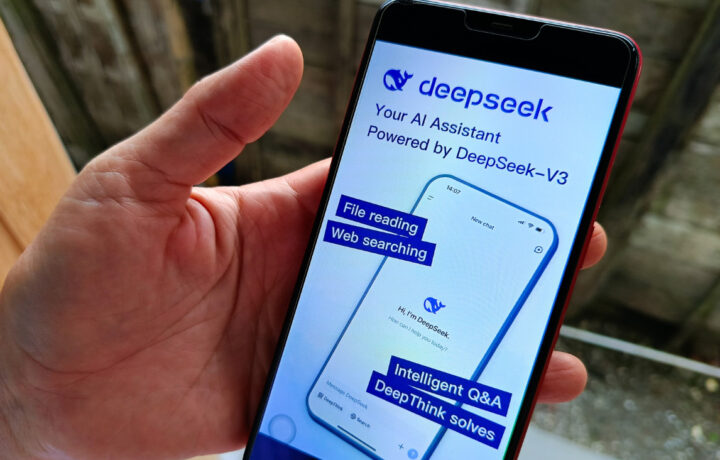
In a Federal Register notice published on Tuesday, the United States Department of Homeland Security (DHS) ordered federal civilian agencies to remove Chinese AI company DeepSeek’s products from government IT systems and prohibit future purchases. DHS also ordered the removal of third-party products and services developed using DeepSeek implementations.
DHS cited concerns that China could transfer or otherwise access sensitive government information, and noted potential malware, security vulnerabilities, and data-collection risks.
Agencies are now required to remove affected products or seek an exception. DHS also recommends enhanced network monitoring, logging, and controls to detect potential data exfiltration. However, the order does not apply to private businesses or consumers.
DeepSeek is an artificial intelligence (AI) research company that was founded in Hangzhou, China, in 2013. It has developed high-performing, open-weight large language models (LLMs), including DeepSeek-R1 and DeepSeek-V4, and claims its technologies rival Western AI systems at a fraction of the development and inference costs.
DeepSeek-R1 is a specialized “reasoning model” that employs a chain-of-thought process to solve complex math, logic, and coding tasks. In contrast, the DeepSeek-V3 & V4 models employ a “Mixture-of-Experts” (MoE) architecture that can scale model capacity without increasing compute cost.
IT’S TikTok All Over Again
The issue with DeepSeek isn’t that different from what happened with TikTok just a couple of years ago. The ByteDance social media app shook up the U.S. social media and advertising markets by outcompeting American platforms. In contrast, DeepSeek has already shocked U.S. tech markets by delivering high-performing AI reasoning models with a fraction of the training of Western AI platforms.
This could be far more serious.
The AI developer explicitly states in its privacy policy that it stores all user data, including prompts, chat histories, account details, and device logs, on secure servers in the People’s Republic of China. Under Chinese national security and data laws, tech companies operating within China are legally required to hand over data and cooperate with government or law enforcement authorities upon request.
Hence, it isn’t hard to see why DHS is getting ahead of this, so that it doesn’t become another TikTok situation. Both apps are known to gather deep user information – such as device data, keystrokes, and usage patterns – raising fears that servers or parent companies based in China could hand over that data to the Chinese government.
“The order bans DeepSeek products and anything built with DeepSeek technology, and that second category is unenforceable as written. DeepSeek publishes its model weights openly,” explained Jacob Krell, senior director for secure AI solutions and cybersecurity at Suzu Labs.
Krell told ClearanceJobs that thousands of distilled and derivative models on Hugging Face carry that lineage.
“No vendor shipping an AI product today can prove their model is DeepSeek-free, because model provenance documentation does not exist the way a software bill of materials does. You can delete an app. You cannot un-distill a weight,” added Krell.
Data and Training Sets
The issue is also similar to the TikTok debate: other firms, including those in the United States, are also gathering data to “train” their AI models. This ban could put that practice in the spotlight, just as TikTok caused Americans to ask what data the U.S. social media platforms were mining from their users.
“The order prompts the harder internal question for private sector security leaders, which is whether the data an employee pasted into DeepSeek last month to summarize a document is now part of someone else’s training set,” Seemant Sehgal, founder and CEO of cybersecurity provider BreachLock, wrote in an email to ClearanceJobs.
“Shadow AI usage has been running ahead of governance in most enterprises for at least the past year,” noted Sehgal. “The specific risk the DHS order names, which is that queries and attached data pass through infrastructure outside allied jurisdictions, applies to any employee using any foreign AI service that offers free access.”
Whereas TikTok was a proprietary, closed social platform that the government could block at the network or app-store level, DeepSeek heavily features open-source AI models. That means developers can download, self-host, and modify the underlying technology independently, making a total ban much harder to enforce.
Then there is the issue of what might have been developed using DeepSeek.
“The affiliates and third-party products clause in the order is where this gets harder, because an employee does not need to use DeepSeek directly to send data to it,” Sehgal continued. “A commercial product built on DeepSeek technology would route the same queries through the same infrastructure without the user ever knowing which model was handling the request.”
Tracking the Software Chain
The issue could be even harder to resolve with third-party platforms. This isn’t just about not using DeepSeek; it means anything created with it shouldn’t be used.
“This is the collapse I traced in my open model visibility work, and I have seen the same failure in software supply chains, where nobody can name every ingredient because nobody was required to record them,” warned Krell. “DHS seems to understand the gap, which is why the order recommends network monitoring and logging to detect data exfiltration instead of trusting the product inventory. That is the control agencies can actually run, since traffic to a model endpoint looks like traffic to any cloud service and has to be caught on data flow, not product names.”
However, the real enforcement mechanism of the DHS ban will be procurement.
“Vendors who cannot document model lineage will start losing federal deals,” added Krell, “and provenance attestation will arrive from contract language before the AI industry builds it voluntarily.”


