The “High North” was largely treated as a diplomatic blind spot for decades, but driven by climate change and receding ice, the Arctic is now drawing greater focus to great power competition. Nations are determining how the region can be employed for shorter maritime trade routes and offer access to new resources.
The United States is certainly paying attention, and it monitors what other nations, specifically potential near-peer adversaries, are doing in the region.
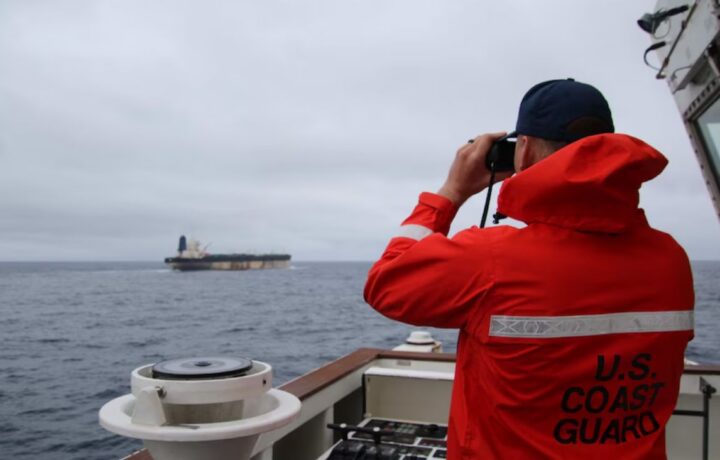
That is why even as Americans were dealing with record heat this summer, some members of the United States Coast Guard were in the far north to closely track a pair of Chinese research vessels that transited through the U.S. exclusive economic zone (EEZ) and onto the U.S. extended continental shelf (ECS) in the Bering Sea.
Chinese Presence Increasing
Eight nations have a presence in the Arctic, including Canada, Denmark, Finland, Iceland, Norway, Sweden, the United States, and Russia. All of those nations – except Russia – are now members of NATO.
China isn’t an Arctic nation, but Beijing continues to expand its military presence, including its ability to conduct operations with the Russian Navy. China also maintains three icebreakers in the Arctic waters, more than the U.S. Coast Guard previously had in service in the region.
The U.S. Coast Guard continues to monitor the heightened activity by China in the U.S. Arctic and has anticipated a continued and increased presence in the region this summer.
“Alongside the Department of War, the Department of State, and our international partners, we are actively responding to competitor activities across an increasingly contested Arctic,” said Rear Adm. Bob Little, U.S. Coast Guard Arctic District commander.
Chinese Snow Dragons Being Tracked
The two vessels that the U.S. Coast Guard has been monitoring include the Xue Long (Chinese for “Snow Dragon”), which remains Beijing’s primary polar icebreaker and research vessel. The 167-meter (547.9 ft) red-hulled ship was built in Ukraine in 1993 as an Arctic cargo ship and later converted by Hudong-Zhonghua Shipbuilding in Shanghai to serve as a polar research vessel.
The second vessel, Xue Long 2, is China’s first domestically built polar icebreaking research vessel. Commissioned in 2019, the ship is 122.5 meters (400 ft) with a displacement of roughly 14,000 tons. It was designed to break 1.5-meter-thick ice at two to three knots, serving a crucial role in China’s expanding Arctic and Antarctic exploration.
Both have been seen as key assets in numerous Chinese expeditions to the Arctic and Antarctic. This summer marked the first time that the vessels were tracked transiting the U.S. EEZ.
In response, the U.S. Coast Guard cutter USCGC Munro executed Operation Frontier Sentinel, a combined U.S. Navy, U.S. Coast Guard, and Canadian Forces exercise focusing on mine countermeasures and migrant vessel scenarios to monitor the vessels during their northbound transit.
“The operation was designed to protect American sovereign rights, ensure consistency with international law and position the Coast Guard to rapidly respond to any detected malign activity,” the Pentagon announced
About the EEZ and ECS
The EEZ is a nation’s maritime area that extends up to 200 nautical miles from the coast. Within this zone, a coastal state has the exclusive sovereign right to explore, exploit, conserve, and manage natural resources, including marine life, minerals, and energy production like wind or water.
The U.S. EEZ covers more than 11 million square kilometers (4.3 million square miles), an area larger than the combined landmass of all 50 states. It is managed federally by several organizations, including NOAA Office of Ocean Exploration, NOAA Fisheries, and the Bureau of Ocean Energy Management (BOEM). The latter oversees offshore oil, gas, and renewable energy leasing.
The ECS includes the seabed and subsoil beyond a country’s standard EEZ.
Under the United Nations Convention on the Law of the Sea (UNCLOS), coastal nations have exclusive, perpetual sovereign rights to explore and exploit the natural resources (e.g., oil, gas, minerals, and sedentary marine life) in this region if the physical continental margin naturally stretches farther out.
“While foreign vessels are permitted to operate within the U.S. exclusive economic zone and over the U.S. extended continental shelf, the Coast Guard remains vigilant to ensure their activities comply with established international laws,” the Department of War explained. “In particular, conducting marine scientific research within this area would require advance permission from the United States and subsequent sharing of the information collected.”


