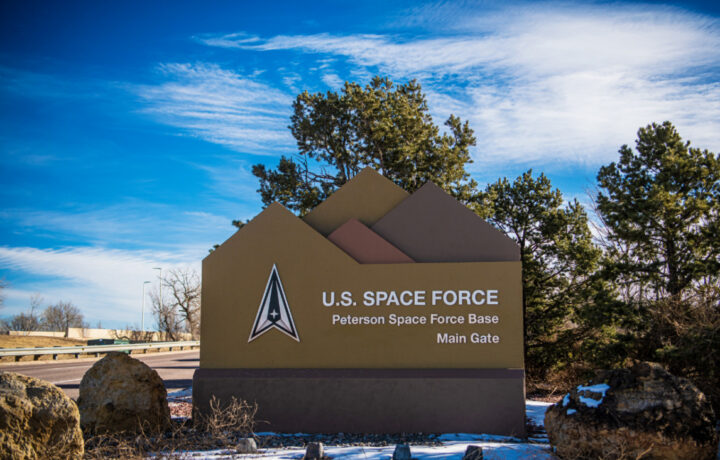
A year ago, Colorado Attorney General Phil Weiser filed a federal lawsuit against the Trump administration for seeking to block the move of the United States Space Command headquarters to Huntsville, Alabama. The Centennial State argued that the relocation from Colorado Springs to Redstone Arsenal in Huntsville is unconstitutional political retaliation tied to Colorado’s mail-in voting system.
In addition, Colorado’s bipartisan congressional delegation and Governor Jared Polis strongly opposed the decision from the outset, arguing that moving the headquarters wastes taxpayer money and harms national security.
However, stakeholders from both cities are now seeking to find common ground and to determine how both regions can contribute to the next generation of U.S. space and homeland defense capabilities.
A Golden Dome Opportunity
Leaders from both cities are meeting in Huntsville to discuss how Huntsville’s missile defense expertise and Colorado Springs’ operational capabilities can work together to support the deployment of next-generation missile warning, tracking, command-and-control, and interceptor systems.
The stakeholders are meeting as the Trump administration seeks to increase investment in advanced missile defense technologies, notably the Golden Dome for America, and to address growing concern over evolving ballistic, hypersonic, and cruise missile threats.
As previously reported, the proposed Golden Dome is the most ambitious U.S. homeland missile defense proposal in decades. It was first established by executive order in January 2025, soon after President Donald Trump returned to the White House.
The U.S. military has tapped over 2,000 companies to potentially compete for and work on components of the missile defense initiative.
How Colorado Springs and Huntsville Can Partner
Both cities are expected to play a crucial role in Golden Dome. Colorado Springs is home to NORAD, U.S. Northern Command, Peterson and Schriever Space Force Bases, and Cheyenne Mountain. It will lead the nation’s missile-warning, space-based sensing, and command-and-control systems. Peterson Space Force Base hosts the infrastructure program acquisition executive office and an expanded officer training program. In addition, a new operations center slated to open by 2030 is projected to add roughly 5,700 military and civilian positions dedicated heavily to the Golden Dome mission.
Huntsville will live up to its nickname “Rocket City,” building the interceptors to stop the threat. The Redstone Arsenal is home to the Missile Defense Agency (MDA). Alabama’s largest city is also home to the U.S. Army Materiel Command, Redstone Arsenal, U.S. Army Space and Missile Defense Command, the Space Development Agency’s South Satellite Control Center, Portfolio Executive (PAE) Fires and other critical defense organizations, alongside NASA’s Marshall Space Flight Center, all making it the nation’s “center of gravity” for ballistic missile defense.
“No single organization or community can deliver a program as complex as Golden Dome alone,” said Johnna Reeder Kleymeyer, president and CEO of the Colorado Springs Chamber & EDC. “Colorado Springs and Huntsville each support critical elements of the nation’s space and missile defense architecture, and this effort highlights the value of aligning those capabilities as the program moves from planning to implementation.”
Aerospace and Defense Sector Hubs
Colorado Springs and Huntsville are both regional aerospace and defense sector hubs, with more than 70 aerospace and defense companies maintaining operations in both cities, a reflection of the increasingly integrated defense-industrial base supporting U.S. missile defense efforts.
Boeing, Lockheed Martin, and Northrop Grumman are among the companies that have secured positions under the MDA’s SHIELD (Scalable Homeland Innovative Enterprise Layered Defense) program, just one of the contracting vehicles supporting development of the Golden Dome missile defense architecture.
There are also additional acquisition programs issued by the Pentagon that will provide opportunities in space-based sensing, interceptor technologies, hypersonic defense and command-and-control systems, areas in which both regions maintain significant technical expertise.
“The success of Golden Dome will ultimately be measured by the nation’s ability to field new capabilities at speed and scale,” said Chip Cherry, President and CEO of the Huntsville/Madison County Chamber. “With Huntsville’s and Colorado Springs’ central role in space and missile defense operations, our two regions are uniquely positioned to help support the next generation of homeland defense systems.”
A Twin-City Partnership
Leaders from both cities are now highlighting how they expand the link between space operations, missile defense, and defense manufacturing to strengthen homeland defense. Instead of continuing to take an adversarial stance, the leaders from each region are looking to bring their unique strengths and to stress collaboration.
“America’s Olympic City and America’s Rocket City have extended incredible support to the men and women of U.S. Space Command through our ongoing headquarters relocation, helping ensure continued mission continuity and focus as we establish a footprint in Huntsville,” explained General Stephen Whiting, commander of the U.S. Space Command, who joined the meeting as keynote speaker.
Whiting is leading the relocation of the HQ from Colorado Springs to Huntsville. He reinforced the commonalities between the two communities and celebrated their shared commitment to national defense, adding, “We are grateful for the novel formation of this twin-city partnership and optimistic that it will continue serving our nation’s critical defense interests as space becomes an increasingly contested domain.”
The Space Command Relocation
The United States Space Command was re-established at Peterson Space Force Base, Colorado, in 2019. President Trump announced its headquarters’ relocation on September 2, 2025. More than 150 of its 1,800-strong force are currently working on the ground at Redstone Arsenal.
Groundwork and construction are scheduled to begin on the permanent new HQ facility in 2027, and at least half of the total command is targeted to be operating out of the Redstone Arsenal by the end of 2028. The permanent headquarters building is slated for completion by 2031, and the final move-in and full operational transition of roughly 1,800 personnel will be completed in 2032.


