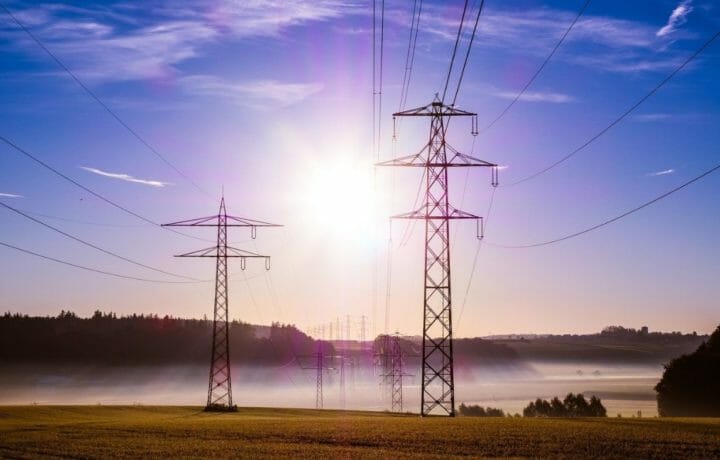
The United States Department of Energy has announced several major funding initiatives and agreements this month. On Tuesday, the DOE confirmed it would provide about $967 million in additional funding through the Grid Resilience State and Tribal Formula Grant program to modernize energy infrastructure and lower electricity costs.
“Lowering costs and unleashing prosperity are top priorities for President Trump,” said U.S. Secretary of Energy Chris Wright. “These commonsense investments provide resources directly to states, territories, and tribes to lower electricity costs and strengthen grid reliability for American businesses and families.”
Training Initiative Award
Last week, the department also announced nearly $11.1 million in funding across eight projects under the Partnerships for Academic-Industry Career Training (PACT) Initiative for oil, gas, coal, and geothermal training.
According to the DOE, the projects could create or expand hands-on training and industry-recognized credentialing programs designed around regional workforce needs, helping prepare American workers for critical jobs that support oil, natural gas, coal, and geothermal energy industries.
Selectees include:
- New Mexico Junior College
- San Jacinto Community College District
- Somerset Community College
- Southern Methodist University
- University of Alaska Fairbanks
- University of Texas Rio Grande Valley
- Leech Lake Tribal College
- Navajo Technical University
Master Energy Purchase Agreement Signed
Deep Fission, Inc. has received a binding 25-year Master Energy Purchase Agreement with the Great Plains Development Authority (GPDA) for a commercial project at the site of its DOE pilot in Kansas.
The initial phase is anticipated to be 150 MW, with a target commercial operation date of September 30, 2028, and could grow through later phases to 2,000 MW pending further demand growth.
“This agreement turns a shared vision into a binding commitment,” said Liz Muller, CEO and Co-Founder of Deep Fission. “Our approach is to bring firm power directly to where it’s needed. Great Plains has been with us since we broke ground, and we’re proud to take this next step together as we deliver reliable, clean, 24/7 power with our Gravity reactor.”
$1 Million for Energy Research at UND
On Monday, the DOE announced it had selected the University of North Dakota (UND) for $1 million in research funding through the Established Program to Stimulate Competitive Research (EPSCoR).
Under the new funding, UND’s research will continue to examine the chemical properties and stability of advanced materials made from graphene and molybdenum disulfide. Selected through the department’s Building EPSCoR-State/National Laboratory Partnerships program, the project will support collaborative research between universities and DOE national laboratories.
This new funding also comes just two months after UND was chosen as the only North Dakota institution for the inaugural cohort of the DOE’s Genesis Mission, which seeks to improve AI security and reliability in battery management and energy systems.
Entergy Mississippi to Receive $4.2M for Grid Improvements
This week, the DOE announced it would award a $4.1 million grant to Entergy Mississippi to upgrade its transmission system and improve performance. The contract was awarded through the Energy Department’s SPARK initiative, and the federal funding is set to provide customers with more reliable and affordable electricity through advanced technology and additional capacity along 375 miles of transmission lines in Mississippi.
“We are grateful for the partnership with the Department of Energy and Katie Jereza and her team for their strong commitment to strengthening energy resilience in our region. This investment is yet another example of Entergy’s dedication to modernizing the electric grid while exploring every avenue available to strengthen reliability and lower costs for customers. The SPARK grant is a substantial allocation and a testament to the hard work of everyone involved,” said Haley Fisackerly, Entergy Mississippi president and CEO.
The grant is also part of a $13.7 million award announced last month, which will enable Entergy and its electric companies in Mississippi, Louisiana, and Arkansas to implement dynamic line rating technology and to conduct targeted geographic surveys, substation and terminal upgrades, and hardware integration across 1,125 miles of existing transmission lines. The company confirmed that the project, expected to last four years, will improve its energy infrastructure in areas seeing growth driven by business development and industrial expansion.
“America can’t afford to let yesterday’s grid slow down tomorrow’s growth,” said Katie Jereza, assistant secretary for the U.S. Department of Energy’s Office of Electricity. “We need to move faster, think smarter, and get more power from the infrastructure we already have. This investment will help unlock capacity on existing power lines, strengthen reliability, and keep electricity affordable for American families and businesses.”
Virginia and West Virginia Transmission Project to Receive Defense Production Act Funding
Earlier this month, the DOE confirmed that it would deploy Defense Production Act (DPA) funding to accelerate the expansion of transmission capacity in Virginia and West Virginia. The funding also aims to enhance grid reliability and infrastructure essential to national defense. Virginia Energy’s Grid Enhancing Technologies for Virginia & West Virginia Large Load Growth project will receive up to $50 million in DPA funding to deploy advanced transmission technologies across existing power lines to increase electricity delivery capacity, reduce congestion, and support growing energy demand across the region.
The project could utilize advanced reconductoring and Dynamic Line Rating technologies along existing transmission corridors, adding an estimated 290 megawatts of transmission capacity across Appalachian Power’s Virginia system. The DOE noted it could also be completed one to four years faster than conventional transmission upgrades.
“These improvements will make the power grid more reliable, lower electricity costs, and help ensure that communities, businesses, military operations, and government and defense-related industries across the region have dependable power, especially during times of high demand or power disruptions,” the DOE explained.
Virginia Energy will lead the proposed project in coordination with Appalachian Power, Potomac Edison, and regional partners, demonstrating the capabilities of advanced conductors and real-time transmission monitoring technologies to expand capacity using existing infrastructure.
“By deploying Defense Production Act funding to secure and expand electricity access in Virginia and West Virginia, the Trump Administration is strengthening the nation’s energy security for decades to come,” said Secretary Wright.
“A stronger electric grid doesn’t always mean building more power lines. Sometimes it means making better use of the ones we already have,” added Jereza. “This investment will help unlock more power, strengthen reliability, and ensure our grid can meet the growing demands of American families, businesses, and national defense.”


