For decades, UFO discussions lived in the same corner of the internet as Bigfoot sightings, blurry photographs, and your cousin’s story about seeing strange lights over a lake. If you wrote about UFOs, took photos, or even believed in them, you probably were written off as slightly crazy.
Today, they’re hosted on a government website.
In what may be the most 2026 headline imaginable, earlier this summer the Department of War published its third release of Unidentified Anomalous Phenomena files as part of the Presidential Unsealing and Reporting System for UAP Encounters, or PURSUE. The latest release includes documents, videos, photographs, FBI interviews, intelligence reports, and witness accounts related to unexplained aerial sightings. The files are publicly available, and more releases are expected.
A unique moment for the cleared community
Many security clearance holders have spent years protecting classified information, carefully following need-to-know principles, and navigating the complexities of government secrecy. Now they’re watching the federal government post UFO files on the internet.
The Department of War says the effort is part of an unprecedented transparency initiative directed by President Donald Trump and coordinated across multiple agencies, including ODNI, the FBI, NASA, intelligence agencies, and the government’s All-domain Anomaly Resolution Office. Officials say the goal is to identify, review, declassify, and publicly release unresolved UAP-related records that have remained hidden for decades.
Before anyone starts updating their LinkedIn profile to “Interplanetary Relations Specialist,” it’s important to note what these files actually are. The government has repeatedly emphasized that these are unresolved cases.
That doesn’t mean extraterrestrials. It means investigators lacked sufficient information to make a definitive determination about what was observed. Some cases may eventually be explained by atmospheric conditions, sensor anomalies, foreign technology, experimental systems, or simple misidentification. Others remain open questions.
Straight out of a sci-fi novel
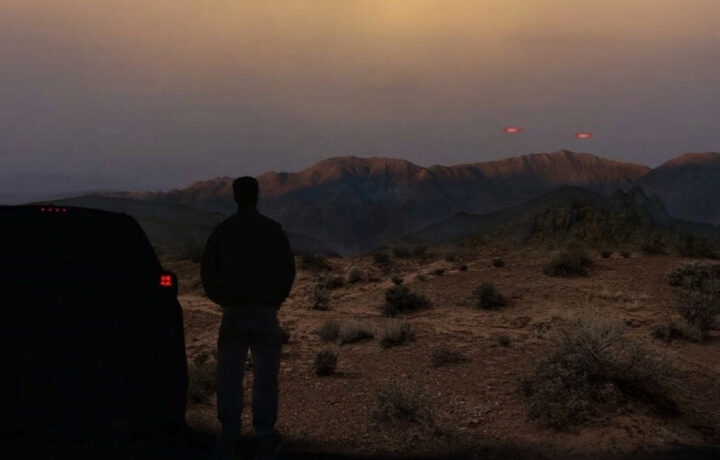
Among the latest documents are accounts of glowing red orbs observed by federal agents, reports of luminous objects that appeared to split into smaller lights, and witness descriptions of spheres containing what observers called a “white plasma sun” at their center. Another report describes a strange object over Colorado Springs that investigators compared to a floating potato covered in irregular panels. Yes, a potato. An unidentified flying potato may now be part of the national security conversation. But the most interesting part of the story isn’t the sightings themselves. It’s the process.
Anyone who has worked in intelligence, defense, or national security understands that uncertainty is part of the job. Analysts routinely evaluate incomplete information. Investigators assess conflicting reports. Decision-makers often have to determine what they know, what they don’t know, and what additional information is needed before drawing conclusions.
In many ways, that’s exactly what these files represent. They’re not proof of alien life. They’re evidence that the government occasionally encounters incidents it cannot immediately explain. And that’s a very different story.
The release has generated enormous public interest. According to the Department of War, the government’s UAP portal received more than a billion visits in the month since its launch in May, highlighting just how fascinated the public remains with the possibility that something unusual might be happening in our skies.
An unexpected lesson
The best intelligence professionals aren’t the ones who jump to conclusions. They’re the ones who remain comfortable with uncertainty while gathering evidence. Whether the subject is foreign surveillance technology, emerging threats, or mysterious lights over the Northeast, the process remains the same: collect data, evaluate possibilities, challenge assumptions, and follow the evidence wherever it leads.
And if one day those files actually do confirm alien visitors? At least the cleared workforce already knows how to handle sensitive information. Although someone may need to update the foreign contacts section of the SF-86.


